



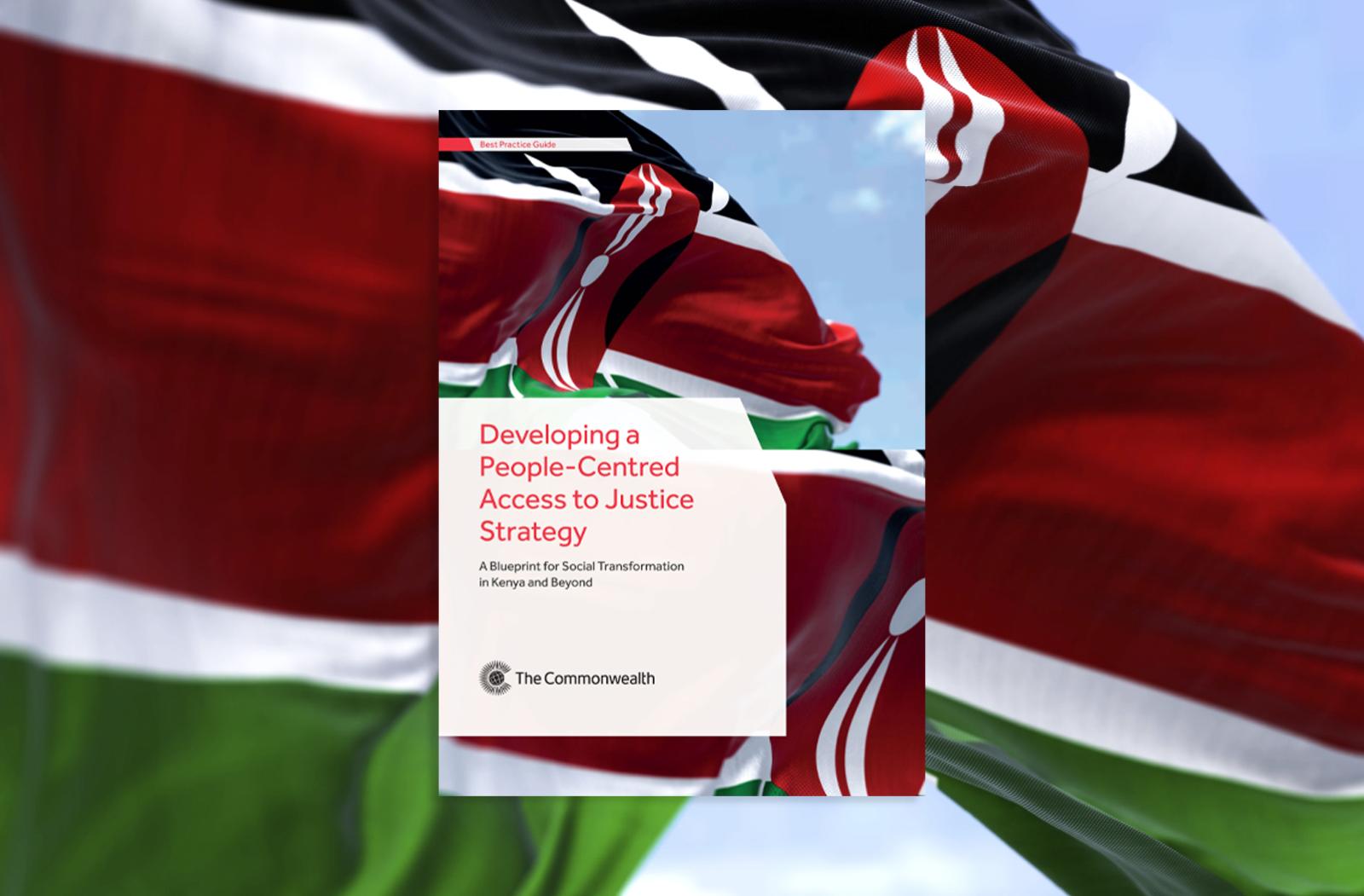
This practical guide is designed to support Commonwealth member countries to develop their own approaches to people-centred access to justice, drawing lessons from the implementation of a 10-year blueprint in Kenya.
Document
This Equal Access to Justice Best Practice Guide provides a road map for judiciaries of Commonwealth countries in developing people-centered justice strategies in response to the need for structured access to justice strategies in these countries. The guide is both a tool and an indicator of growing recognition that justice must be planned, not expected to develop organically. It affirms that people-centred access to justice is not merely an aspiration, but a technical and policy imperative requiring deliberate design, leadership and resourcing.
The guide provides a practical step-by-step process through which Commonwealth countries may develop and implement people-centred access to justice strategies. Grounded in the principles of inclusion, equity, responsiveness and community participation, the guide responds to the persistent justice gaps that disproportionately affect marginalised groups across the Commonwealth.
The guide draws innovative practices and lessons from Kenya’s Social Transformation through Access to Justice (STAJ) blueprint. It emphasises that while justice strategies are state-driven, they must also be co-created with communities, recognising diverse pathways to justice beyond formal courts.
Key components of a people-centred strategy include:
- evidence-based problem identification through legal needs surveys, court data and community engagement;
- inclusive multistakeholder processes, involving civil society, traditional leaders, local governments and justice sector actors;
- integrated service delivery models, including mobile courts, alternative justice systems, court user committees, legal aid and technology-enabled platforms;
- strong monitoring, evaluation and learning systems, to ensure continuous adaptation and responsiveness to evolving justice needs.
The guide advocates for whole-of-government and whole-of-society approaches, backed by strategic partnerships, adequate financing and political commitment. It offers step-by-step guidance, tools and case studies to support countries in building justice systems that are people centred, accessible, fair and trusted by all.
Ultimately, this guide aims to contribute to the realisation of Sustainable Development Goal 16 (peace, justice and strong institutions) by equipping Commonwealth countries with actionable strategies to close the global justice gap and uphold the rights and dignity of all people.