



1.1 Defining access to justice
Accessing justice also involves empowering people to seek it and securing the mechanisms to get it.1 It is therefore not just about accessing formal courts. It includes access to other preferred alternative modes of dispute resolution.2 It is therefore best understood in its broader context:
‘Access to justice is, therefore, much more than improving an individual’s access to courts, or guaranteeing legal representation. It must be defined in terms of ensuring that legal and judicial outcomes are just and equitable.’3
Rights are granted to those in a position to claim them, making legal awareness an imperative to accessing justice. Apart from building capacity in the judicial sector, grassroots legal empowerment must also therefore be part of all engagements towards the realisation of access to justice for all. Access to justice must therefore be perceived from both an outcome and operations perspective:
‘As a process, access to justice ought to encompass how people navigate and are treated in the many relations and transactions (with dignity and legal consequences) that comprise everyday life.’4
Equal access to justice is not only a factor of the rule of law, but also an imperative for:
- peaceful societies
- economic growth
- institutional legitimacy
- social cohesion
- legal empowerment
- sustainable development.
Access to justice is therefore critical in upholding the socio-economic well-being of citizens and is essential to fostering a peaceful and harmonious co-existence in society, state stability, and business confidence and economic growth. It is no wonder that in Kenya it is a constitutional right enshrined in the Bill of Rights of the Constitution of Kenya 2010. The Constitution provides that:
‘The State shall ensure access to justice for all persons and, if any fee is required, it shall be reasonable and shall not impede access to Justice.’5
The Constitution further requires national state organs such as the judiciary to ensure reasonable access to its services in all parts of the republic, so far as it is appropriate.6
1.2 Essential elements of access to justice
Though access to justice may have different perceptions by justice seekers in their diverse circumstances, it has certain key common elements.7 These elements are interconnected and form the foundation for a people-centred justice system (see Table 1.1)
Table 1.1. Essential elements of access to justice
|
Element |
Description |
|---|---|
|
1. Fair and transparent legal framework |
Laws must be clear, just, non-discriminatory and consistently applied. Legal processes should uphold the principles of due process and equality before the law. Judicial precedents should also abide by stare decisis to avoid confusing justice seekers, |
|
2. Legal awareness and empowerment |
Enjoyment of access to justice must be preceded by knowledge of one’s rights as a person cannot possibly access rights they have no knowledge of. People need to know their substantive rights and the legal procedures and processes on how to claim them. In this regard, legal education, sensitisation on rights, awareness campaigns and civic literacy are essential. |
|
3. Availability and accessibility of justice services |
This includes physical infrastructure (courts, mediation centres) accessible to all, including the physically challenged, and within geographical reach. It also includes the incorporation of translation services to address language barriers, digital access to courts, tribunals, legal aid and alternative dispute resolution (ADR). Services should be available in rural and marginalised areas, for example, through mobile courts. The design and maintenance of the infrastructure should also be gender sensitive. For instance, lack of toilet facilities with running water may prevent women accessing justice during menstruation. |
|
4. Efficient and accountable justice institutions |
Courts, police service, prisons, children services, probation and after-care services, and other administrative bodies should be well-resourced, impartial and transparent. Timely resolution of cases is crucial to prevent denial of justice. Clear and simple complaint mechanisms should be put in place to enable justice seekers to achieve resolution where they feel violated. At the institutional level, annual reports on the state of the judiciary and administrative of justice should be communicated to relevant organs, like Parliament, and to the public at large. |
|
5. Affordable and effective legal aid and assistance |
The cost of justice, especially in terms of legal fees or court filing fees, can be prohibitive compared to the median income of most ordinary citizens. Legal aid and paralegal support should be available to those who cannot afford legal representation. Mechanisms for early legal advice and assistance are key. |
|
6. Alternative dispute resolution (ADR) and informal mechanisms |
An overwhelming percentage of justice seekers resolve their disputes in fora other than the formal courts.8 Community-based, traditional or restorative justice systems that are culturally appropriate and accessible should be available and must operate in line with human rights standards. |
|
7. Inclusivity and non-discrimination |
Justice systems need to be sensitive to the needs of vulnerable and marginalised groups (for example, women, children, persons with disabilities, Indigenous peoples). Data disaggregation and tailored interventions are necessary to ensure responsiveness to the needs of different interest groups. |
|
8. Participation and voice |
Communities should be involved in shaping justice services and holding institutions accountable. User feedback and justice audits are useful for strengthening responsiveness. |
|
9. Innovation and use of technology |
Digital tools (e-filing, mobile courts, virtual courts) can expand reach and efficiency. Technology must be inclusive and not deepen the digital divide, especially where communities cannot access appropriate gadgets or connectivity. |
|
10. Monitoring, evaluation and learning |
There must be regular assessment of justice needs, outcomes and impact. Planning and policy reform must be evidence based. |
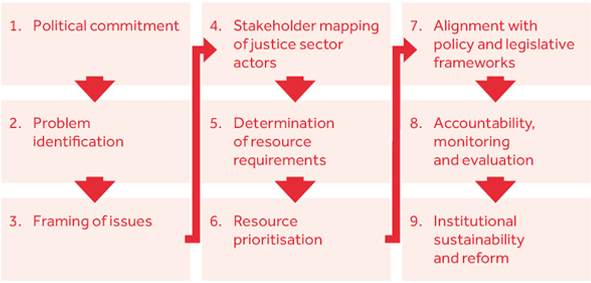
Figure 1.1. Elements of an access to justice strategy
1.3 Importance of access to justice strategies
As stated above, access to justice is a foundational pillar of the rule of law, democratic governance and inclusive development. However, it encounters numerous barriers, such as the high cost of litigation, delays in hearing and determination of cases, endemic case backlog, lack of legal awareness and difficult-to-understand technicalities of the judicial process. In marginalised areas, the difficult terrain and geographical distance to court stations become practical challenges to accessing justice. Rights mean little if those entitled to them are not aware they exist or are not able to reach the place where justice is dispensed. Access to justice only makes sense when justice seekers can secure fair outcomes. Appropriate strategies must therefore be continuously developed and maintained to surmount the ever-evolving barriers.
Access to justice strategies, however, remain uncommon in many Commonwealth countries. This gap has created inconsistencies in how justice challenges are identified, prioritised and addressed, which has led to ad hoc programming, insufficient funding and exclusion of community voices. Without a coherent and co-ordinated strategy, efforts to improve justice delivery often remain fragmented, reactive and under-resourced. The paucity of structured strategies highlights the need for a practical, experience-based guide to support member countries in developing their own approaches.
At their meeting in Colombo, Sri Lanka in November 2019, Commonwealth law ministers adopted the Declaration on Equal Access to Justice (‘the Declaration’). In adopting the Declaration, law ministers were of the view that ensuring equal access to justice for all was critical to the realisation of Commonwealth member countries’ various objectives as set out under United Nations Sustainable Development Goal (SDG) 16. This guide therefore offers a practical, people-centred roadmap that could be adopted with appropriate variations based on the lived realities of each jurisdiction.
An access to justice strategy serves to ensure that:
- the issues sought to be addressed are clearly identified
- the identified issues are appropriately named and prioritised
- the interventions to address those issues are clearly spelt out
- the stakeholders’ are mapped-out and responsibilities appropriately assigned.
- the timelines for the implementation of the identified interventions are realistic
- adequate resources are allocated towards the identified interventions.
A properly developed access to justice strategy should, therefore, provide a structured, systematic approach to identifying, prioritising and addressing justice needs, especially for the marginalised and vulnerable populations, as shown in Figure 1.1. It should consist of the following elements.
1. Political commitment
The development of an access to justice strategy demonstrates a political commitment to shift towards inclusive governance. The commitment must come from the top leadership of the institution, and deliberate efforts to obtain the buy-in of all concerned must be made.
2. Problem identification
An access to justice strategy helps in identifying the real justice needs of all, especially the marginalised, vulnerable, invisible or deprioritised in broader societal or governance agendas.
3. Framing of issues
By specifically naming and framing issues, for example, traditional beliefs, economic disempowerment, lack of legal aid, procedural delays, case backlog or discriminatory practice, the strategy creates visibility and political momentum for reform in the respective areas.
4. Stakeholder mapping
Access to justice is not the business of any single institution. The stakeholders in the justice chain must all be involved if it is to succeed. All the institutions and groups concerned must be identified, with their respective roles clearly spelt out along with the expectations of each from the other. If any of the institutions is left out or fails to play their part, the implementation of the strategy could be compromised.
5. Determination of resource requirements
The resources required are determined for the purposes of budgeting and developing resource mobilisation strategies.
6. Guided resource allocation
The strategy should provide a clear justification for the allocation of human, financial and institutional resources. Resources are often limited with competing priorities. Prioritisation ensures that resourcing for justice sector reforms are evidence based and impact oriented.
7. Alignment with policy and legislative frameworks
An access to justice strategy allows for sector-wide approaches within the existing policies and laws in a given jurisdiction. This helps in moving away from silo actions as it integrates efforts across institutions – including the judiciary, legal aid bodies, the police, correctional services, children services, bar associations, civil society and others – so promoting synergy and reducing duplication. It creates a shared framework of goals, indicators and priorities. It must be geared towards addressing gaps in practice and policy.
8. Accountability and measurement
A well-developed strategy includes mechanisms for monitoring and evaluation. This allows for the measurement of progress to ensure the activities are progressing as planned, and allows for corrections as needed and institutional accountability. It ensures that access to justice gains can actually be measured.
9. Institutional sustainability and reform
Sustainability is crucial for achieving long-term impact and embedding a culture of people-centred justice. The strategy should serve to institutionalise reforms, moving them beyond the discretion of individual actors or temporary donor-funded or non-government-funded projects.
1.4 The concept of people-centred justice
The people-centred justice concept is based on the understanding that people experience justice differently, and that they respond to it differently. In that regard, planned interventions must be tailored to the unique contexts of the justice needs of people, their capacities and capabilities. People-centred justice (PCJ) must therefore aim to empower citizens, respect diversity, simplify procedures and value the contributions of all justice actors, formal and informal.9
To achieve its purposes, a people-centred access to justice strategy must be data driven, evidence based, innovation focused and must be capable of creating an enabling regulatory environment that allows continuous improvement in the administration of justice. It is based on a rule-of-law approach that relies on the perspectives, needs, strengths and expectations of the justice user to improve the quality of justice and reduce barriers to service delivery.
Therefore, in developing a PCJ strategy, the elements of this concept must be considered to ensure that it is focused on expanding access to justice, in accordance with Sustainable Development Goal 16 of the 2030 Agenda, which is to promote peaceful and inclusive societies for sustainable development, provide access to justice for all, and to build effective, accountable and inclusive institutions at all levels.
1.5 The guiding principles and commitments for a people-centred access to justice strategy
As enunciated in the Hague Declaration on Equal Access to Justice by all by 2030,10 people-centred justice approaches are founded on the following core commitments.
- To empower people to access services and opportunities.
- To improve justice journeys.
- To put people and their legal needs at the centre of justice system.
- To use justice for prevention of disputes and to promote reconciliation.
- To work to solve justice problems.
Traditional justice systems are slowly gaining popularity, and in some regions they are the preferred mode for dispute resolution. The Organisation for Economic Co-operation and Development (OECD)11 has been at the forefront in championing the shift towards a people-centred justice and has studied the links between inclusive growth and the justice agenda. Through this process, the OECD developed a four-stage framework for ensuring that justice pathways and services are responsive to the needs of people. To that end, it proposes the following questions that would be useful when developing a PCJ strategy.
- Who experiences legal needs and what legal needs do they have?
- Where and when are these needs experienced?
- What works to meet these needs most effectively?
- How should these services be delivered and evaluated?
Aligned with these stages, the OECD further proposed the following criteria for people-centred justice.
- Accessibility
- Availability
- Proactivity and timeliness
- Appropriateness and responsiveness
- Empowerment
- Equality and inclusion
- Outcome-focus and fairness.
The OECD framework intertwines with the access to justice principles and therefore reaffirms the elements required for PCJ strategies for enhanced access to justice.
People-centred access to justice essentially places individuals and communities at the core of justice systems, ensuring that justice processes are responsive to their needs, experiences and realities. This approach shifts focus from institutions to people, recognising that justice should be accessible, fair and effective for everyone, particularly the poor, marginalised and vulnerable. The next chapter explores the Kenyan journey towards a people-centred justice system from the pre-colonial, colonial and post-independence period to the current post-2010 constitutional system.
Footnotes
1 International Development Law Organization (IDLO) (no date), ‘Creating a Culture of Justice’, www.idlo.int/sites/default/files/pdfs/IDLO%20Leaflet%20-%20English.pdf. | [back]
2 Penal Reform International (2000, November 10), ‘Access to justice in sub-Saharan Africa: The role of traditional and informal justice systems’. www.penalreform.org. | [back]
3 UN Development Programme (UNDP) (2004), ‘Access to Justice Practice Note’. www.undp.org/publications/access-justice-practice-note. | [back]
4 Kenya Judiciary (2020), ‘AJS Baseline Survey’. https://judiciary.go.ke/download/alternative-justice-systems-baseline-policy-and-policy-framework/. | [back]
5 Republic of Kenya (2010), Article 48, The Constitution 2010 (KEN). https://new.kenyalaw.org/akn/ke/act/2010/constitution/eng@2010-09-03. | [back]
6 Ibid., Article 6(3). | [back]
7 UNDP et al. (no date), ‘Informal Justice Systems: Charting a Course for Human Rights-Based Engagement’. www.undp.org/sites/g/files/zskgke326/files/publications/Informal-Justice-Systems-Summary.pdf. | [back]
8 Hague Institute for Innovation in Law (HiiL) (2018), ‘Justice Needs Survey and Satisfaction in Kenya 2017’, HiiL, Kenya Judiciary and World Bank. www.hiil.org/wp-content/uploads/2018/07/hiil-report_Kenya-JNS-web.pdf. | [back]
9 International Development Law Organization (no date), ‘Creating a Culture of Justice’. www.idlo.int/sites/default/files/pdfs/IDLO%20Leaflet%20-%20English.pdf. | [back]
10 Grassroots Justice Network (2019), ‘The Hague Declaration on Equal Access to Justice for all by 2030’. https://namati.org/news-stories/the-hague-declaration-on-equal-access-to-justice-for-all-by-2030. | [back]
11 Organisation for Economic Co-operation and Development (2021), OECD Framework and Good Practice Principles for People-Centred Justice. https://doi.org/10.1787/cdc3bde7-en. | [back]