

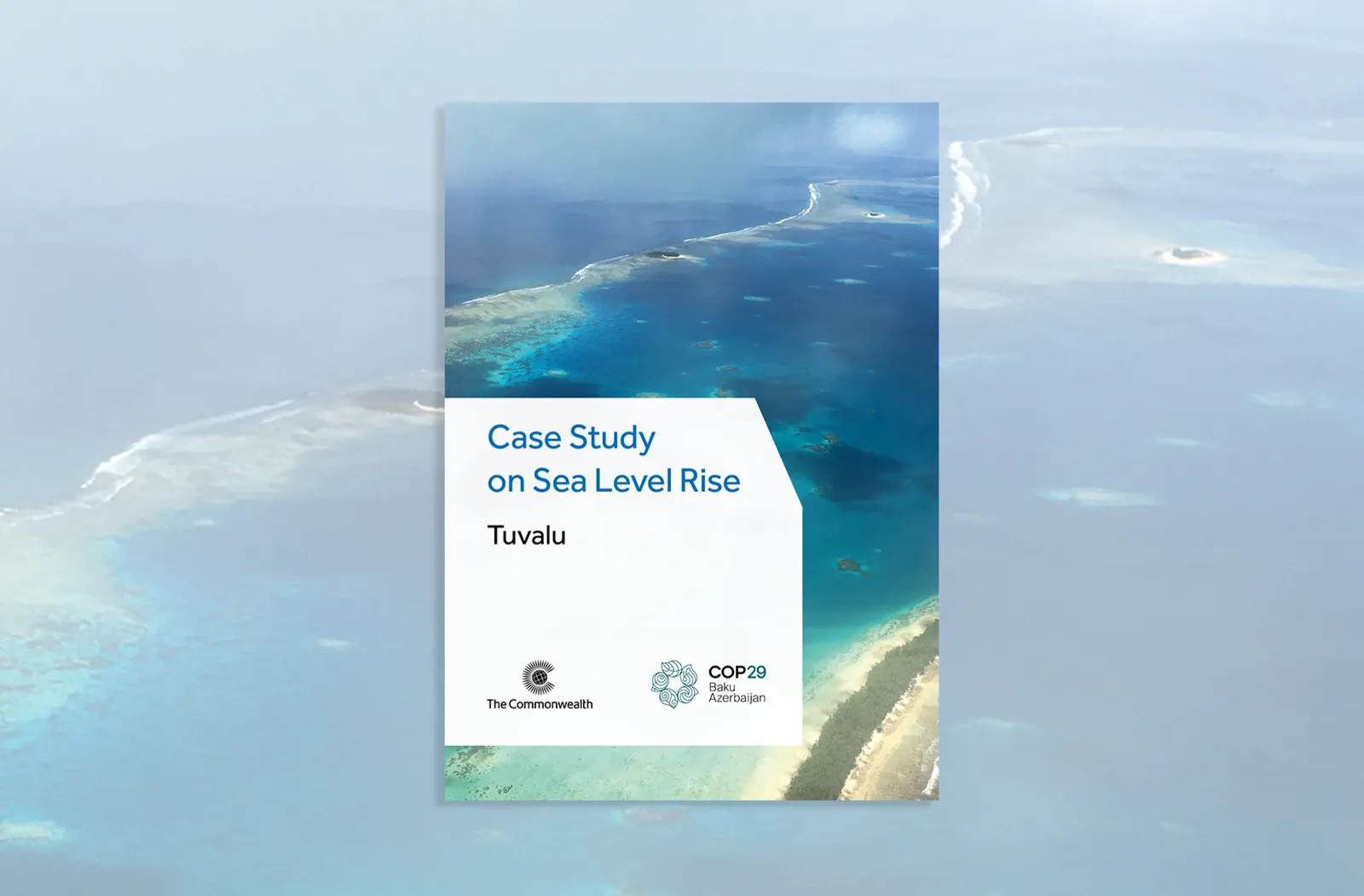
Tuvalu is the world’s fourth-smallest nation and a Pacific small island developing state (SIDS) and least developed country (LDC) with a total land area of 26 km². Its climate change vulnerabilities centre around sea level rise and its compounding effects, with the average height of its atoll and reef islands above sea level being less than 3 metres, and a maximum elevation of 4.6 metres.
This case study provides an overview of the key vulnerabilities and impacts of sea level rise and climate change in Tuvalu, examining the country’s national adaptation strategies and reviewing the role of two main projects aligned with the National Adaptation Plans of Action.
Climate change adaptation responses in Tuvalu fall within the categories of protection (hard coastal infrastructure), accommodation (climate resilient crops), ecosystem-based adaptation (marine ecosystem protection), advance (land reclamation), and communications infrastructure or disaster risk management. The sea level rise of about 5 millimetres (mm) per year near Tuvalu exceeds the global average of 3.2 ± 0.4mm per year, making adaptation and mitigation critical.
Each of Tuvalu’s NAPA-related projects was ambitious in design, but basic challenges in implementation relating to communication and transportation have hindered progress. This review finds that successful implementation varies with location, and logistics issues associated with the outer islands must remain at the forefront of future planning. Tuvalu’s prevailing environmental challenges, compounded by limited human resource and financial capacity, mean continuing reliance on international and regional support. The projected conversion of the TCAP project management unit into a Coastal Management Authority indicates formalising integration of adaptation
into national planning and policy design.