



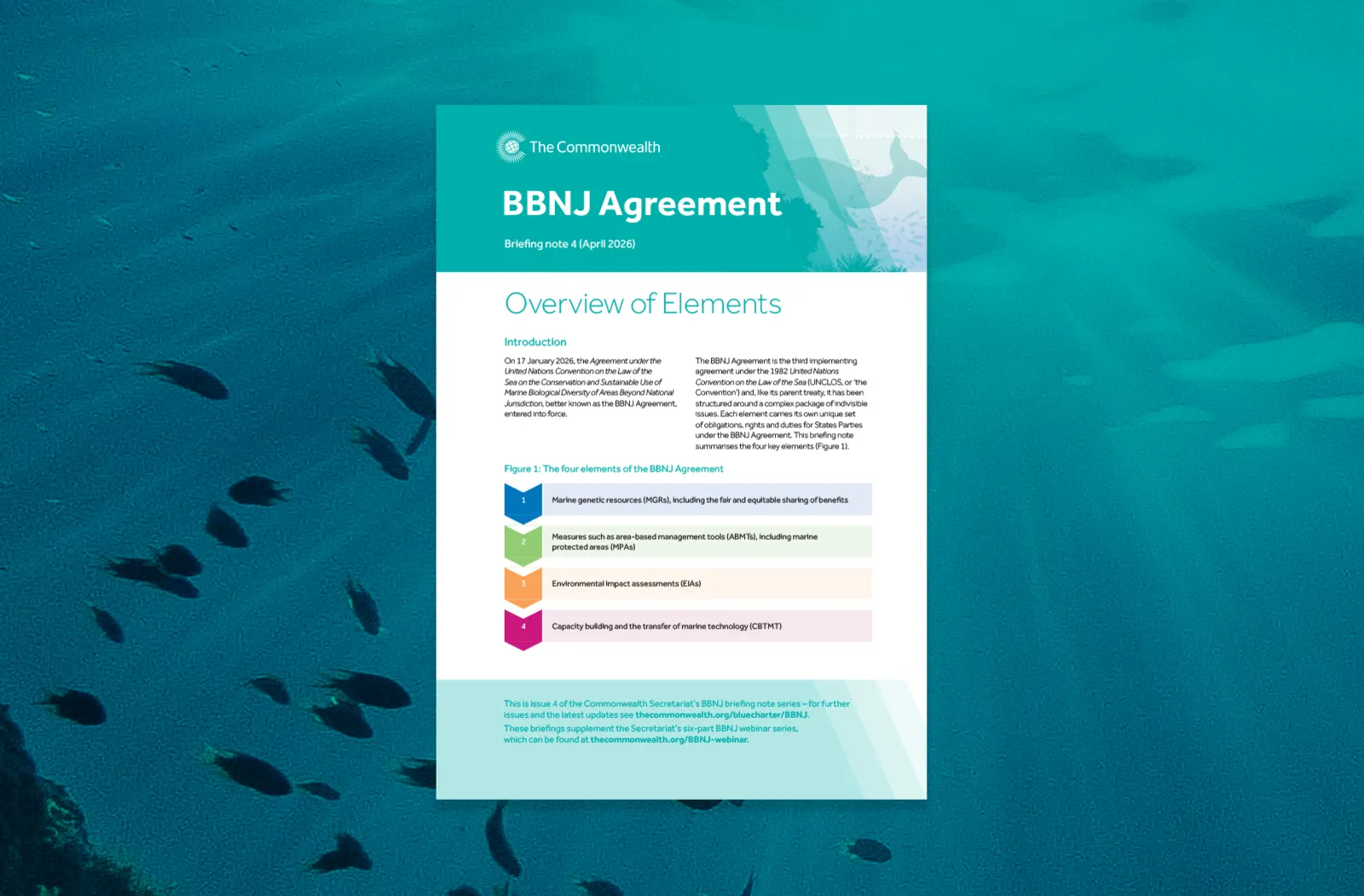
The BBNJ Agreement is the third implementing agreement under the 1982 United Nations Convention on the Law of the Sea and, like its parent treaty, it has been structured around a complex package of indivisible issues. Each element carries its own unique set of obligations, rights and duties for States Parties
under the BBNJ Agreement. This briefing note summarises the four key elements.
Marine Genetic Resources and digital sequence information hold the potential to benefit humankind in a variety of ways, including through innovations in the pharmaceutical, cosmetic and food industries, among others.1 Given that sophisticated and expensive technologies are required to reach deep-sea environments and sample organisms, access to these resources in marine areas beyond national jurisdiction has been limited to date to a small number of developed states.
The BBNJ Agreement also provides other relevant definitions relating to the collection and utilisation of marine genetic resources, including definitions for ‘biotechnology,’ ‘collection in situ’ and ‘utilisation of marine genetic resources.’ No definition of digital sequence information is included in the BBNJ Agreement because no internationally recognised definition existed at the time of the negotiations. A definition of digital sequence information is currently being negotiated under the United Nations Convention on Biological Diversity.
Significantly, the BBNJ Agreement includes the first internationally agreed definition of the term ‘marine genetic resource'.