


A blog by John E Scanlon AO. John is Australian and British, and lived in Kenya while working for the United Nations.
The Commonwealth Secretariat acknowledges that our land resources are facing a triple crisis: climate change, land degradation and biodiversity loss. Growing evidence makes one thing clear, tackling these interconnected threats demands collective, co‑ordinated and integrated action on a global scale.
Within three different corners of the Commonwealth, nature-based solutions are proving effective in restoring water systems - positively improving biodiversity and the lives of people who live there.
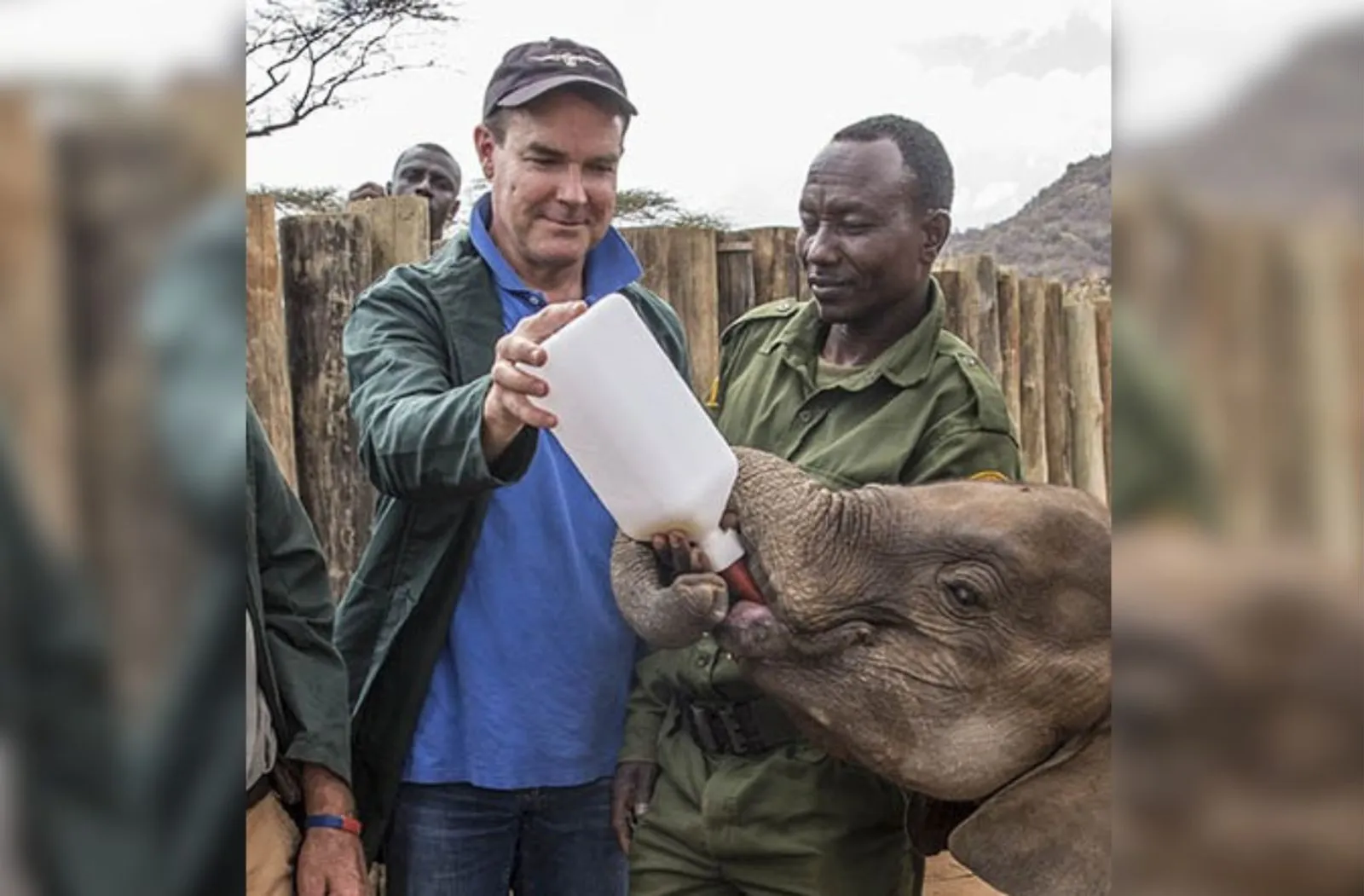
Kenya: ‘Our water, our responsibility’
Every year during the dry season, community members and conservationists gather in the semi-arid plains near Mount Kenya for a rocky five-day camel trek along the Ewaso Ng’iro river basin. Their mission objective is speaking to local people and raising awareness about conserving this vital artery, which serves an estimated four million people. The river itself drains parts of 10 counties along its 716km journey from the mountain to the arid north.
Today, drought and water insecurity threaten this once bountiful landscape, and these pressures have led to conflict between upstream (primarily farmer), mid-stream (primarily agro pastoralists) and downstream (primarily pastoralist) water users. But a unique partnership between private, public, and civil actors is helping to address the issue of equitable water management under the motto, Maji yetu, Jukumu Letu (Our Water, Our Responsibility).
Established in 2016, the Mount Kenya Ewaso Water Partnership brings together commercial farmers, water user associations, county governments, community forestry associations and research institutions. Its remit is ambitious, but it is proving successful by working hand in hand with communities to restore ecosystems and build resilience.
The partnership provides seed funding to support income-generating activities that diversify livelihoods and offer affordable loans for investments such as dam liners, piping, and water storage tanks. This, combined with community led water monitoring and advocacy for equitable water use is also serving to restore the natural ecosystem and cultural heritage of these Indigenous lands.
Across the world, a growing demand for water and degraded ecosystems are rapidly disrupting water systems that have served and shaped people’s lives for centuries. Yet a combination of science, Indigenous knowledge and restoration is making a difference where it matters most.
United Kingdom: Beavers – nature’s ecosystem engineers
In the United Kingdom, widely considered as one of the most nature-depleted countries in the world, an ancient species is helping to restore river health – the beaver. Once hunted to extinction for its fur, beavers have been reintroduced into streams and rivers in England and Scotland as part of government efforts to restore biodiversity and provide flood defences.
Dubbed nature’s ecosystem engineers, beavers are extraordinary in their ability to build wetland habitats that provide havens for wildlife. The dams they build store water, improve its quality and slow the flow, offering protection to people living downstream in areas prone to flooding. The UK is now on average seven per cent wetter than it was during the mid-late 20th Century, driven by a steady increase in rainfall over the past 40 years. The reintroduction of beavers to river systems in the UK is being carefully managed, and priority is being given to areas where beavers are unlikely to cause conflict with people, farmland and infrastructure.
Balancing the needs of the people who live on and depend upon the land with those of the natural environment is critical for sustainable conservation and restoration.
Australia: First Nations people and partners are restoring the Murray River
In Australia, where I was born, the challenge of water scarcity is stark. It is the driest populated land mass continent on Earth. Yet in the south east lies one of its most abundant and productive regions, the Murray-Darling river basin, an interconnected network of rivers, lakes and wetlands covering more than one million square kilometres.
The Basin supports 40 per cent of all Australian agricultural output and provides water to more than 2.4 million people living there, including around 122,000 First Nations people who have lived there for 50,000 years. To them, water is more than a resource: it’s a spiritually significant part of their history and identity.
The Basin is also an important home to unique ecosystems and endemic species as well as 16 internationally significant wetlands. But unsustainable water extraction and poor land management, compounded by low rainfall, is imperilling the Basin’s future. At least 20 native mammal species have become extinct while around half of its fish species now require conservation.
Since 2002, the Living Murray Programme has been working with state governments, First Nations people and local communities to restore the Murray River. Backed by over AUS$1 billion in investment, the programme has improved the delivery of water to iconic environmental and historical sites including the floodplains, Ramsar-listed wetlands and forests of the Murray. It is now a key initiative of the Australian government’s Murray-Darling Basin Authority.
The ripple effect
From the mountains of Kenya to the streams of the UK and the great rivers of Australia, these three initiatives demonstrate the importance of mirroring nature’s own interconnectivity in our efforts to conserve and restore the biodiversity that sustains life. Each positive intervention affects a myriad of others, strengthening ecosystems, supporting communities and building resilience.
Related content
- The Commonwealth Living Lands Charter
- 8th Commonwealth Climate Finance Access Hub Steering Committee Meeting