


Many countries’ gender equality initiatives are facing intensifying, organised opposition – often by well-funded international actors seeking to undermine women’s economic, political and social progress by influencing political decision-making and public opinion. This report provides a concise, evidence-based analysis of the impacts of this 'pushback' across the Commonwealth’s five priority areas: women in leadership; women’s economic empowerment; ending violence against women and girls; gender and climate change; and accountability for gender equality.
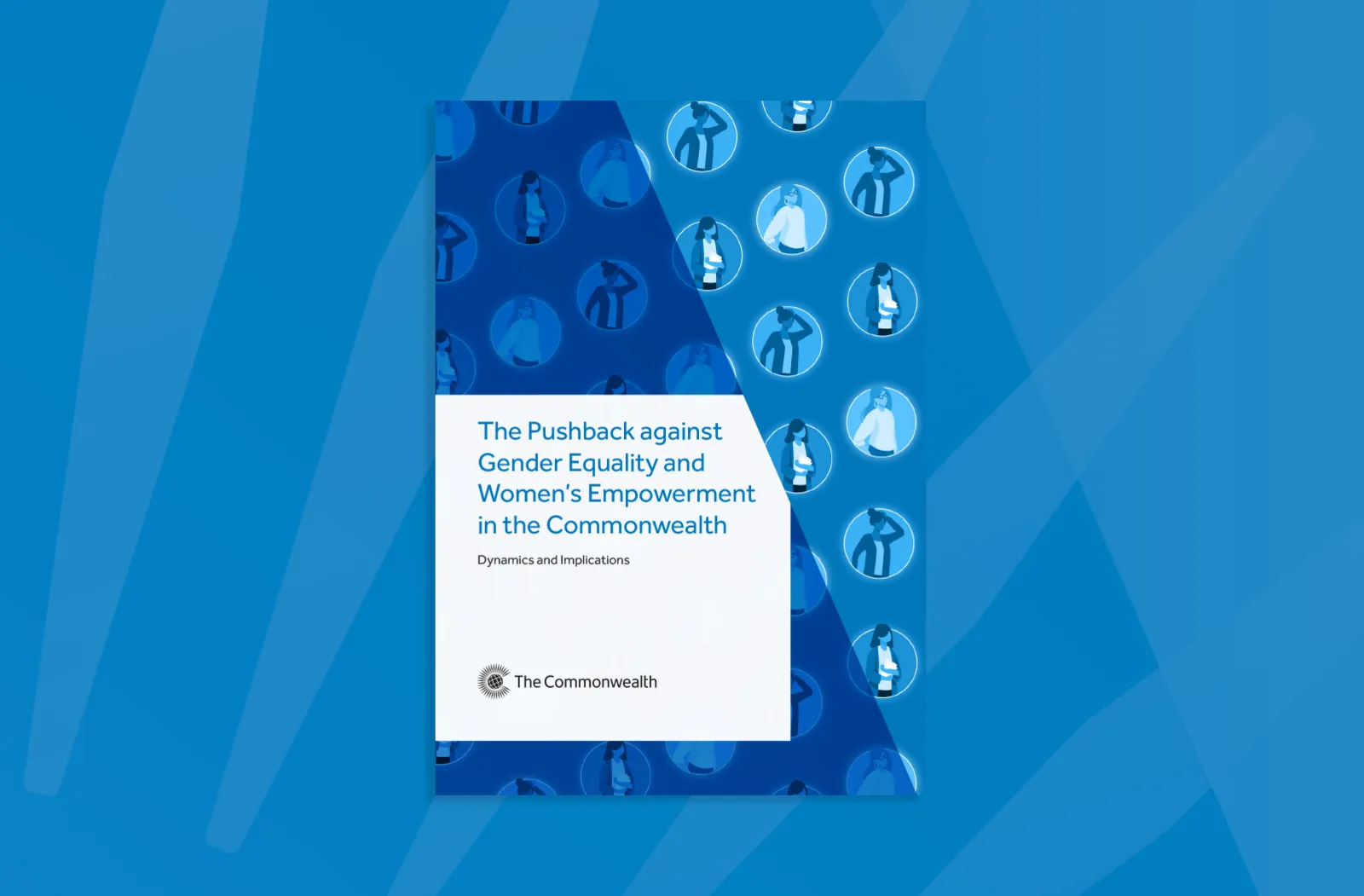
Many countries’ gender equality initiatives are facing intensifying, organised opposition – often by well-funded international actors seeking to undermine women’s economic, political and social progress by influencing political decision-making and public opinion. They often attempt to erode consensus and support for gender equality initiatives by promoting the importance of:
- treating everyone the same, thereby invalidating the specific needs of women
- conceptions of ‘family’ and the protection of ‘tradition’ or ‘culture’ that reinforce structures that have historically disadvantaged women.
Commissioned by the Commonwealth Secretariat and published in tandem with the Progress towards Gender Equality and the Empowerment of Women in the Commonwealth 2026, this report assesses the extent and impact of these actors, and recommend actions to ensure progress towards achieving gender equality across the Commonwealth.
Cross-border transnational spending on efforts to challenge and oppose women’s rights, gender equality and inclusion worldwide is estimated at US$1.18 billion between 2019 and 2023.
A 2025 report by the UN Research Institute for Social Development and UN Women noted that nearly a quarter of governments worldwide reported a rise of co-ordinated opposition to gender equality imperatives. Such dynamics have also been reflected in intergovernmental outcome texts, such as the communique of the 2022 Commonwealth Heads of Government Meeting and the outcomes of the 13th meeting of Commonwealth Women’s Affairs Ministers. These documents invoke terms including ‘setbacks’, ‘reversing gains’, ‘persistent discrimination’, ‘uneven progress’, ‘risks’ and ‘challenges to implementation’ to describe the current context in which they are implementing programmes for gender equality.
This opposition to gender equality and women’s empowerment have had material impacts on progress across the five priority areas of the Commonwealth Declaration for Gender Equality and the Empowerment of Women 2022–2030, including in terms of:
- increasing rates of violence, sexism and sexual harassment, both physical and online, towards women in leadership in general and parliamentarians in particular
- the erosion of the institutional capacity to support women in leadership initiatives due to decreased funding for national women’s machineries
- reinforced expectations on women to perform the bulk of unpaid labour, especially care work, thus reducing their ability to participate in the labour market
- technology-facilitated VAWG and normalisation of violence, compounded by defunded survivor support systems, inadequate laws, and unacknowledged rates of child marriage in remote communities
- growing resistance to identifying the gendered impacts of climate change
- the deprioritisation of data collection on gender equality, due in large part to lack of political will.
The consequences of inaction extend beyond the gender equality agenda: where women are excluded from leadership, economies underperform and governance weakens; where violence goes unaddressed, communities become less stable; where rights-based language erodes, decades of Commonwealth commitments become harder to sustain.
The report argues that the risks of inaction are risks to the Commonwealth’s broader resilience agenda itself. It puts forward several recommendations on how to ensure continued progress towards gender equality across the Commonwealth in the face of increased opposition.
- Secure political stability by modernising and implementing legislation to protect women and girls from emerging threats such as online violence and hold perpetrators accountable.
- Unlock economic growth by promoting women’s engagement in the labour market and entrepreneurship through continued investment in girls’ secondary education, digital literacy and artificial intelligence (AI) skills.
- Boost national competitiveness by removing barriers to women’s economic participation through investing in childcare and implementing protections against workplace violence and discrimination.
- Strengthen environmental resilience by embedding gender analysis in the development and implementation of national climate change strategies. Positioning women at the centre of decision-making with dedicated climate finance to empower women economically will drive more resilient green and blue economies.
- Ensure these gains are realised by expanding national institutional capacity and ringfencing adequate, sustainable funding to advance gender equality and inclusive democratic participation.
- Optimise policy-making by resourcing the systematic collection of high quality, comparable and gender-disaggregated. Such data are fundamental for accurate evaluation of the economic and social impact of gendered initiatives.
- Scale success through regional and pan-Commonwealth co-operation and exchange of evidence-based, high-impact gender equality solutions to accelerate national and collective progress.
Copyright (c) 2026 Commonwealth Secretariat