



These interventions reflect the Secretariat’s ongoing dedication to empowering small member countries within the Commonwealth family. The selected interventions are largely those helping small states navigate the economic, energy and climate-related challenges that are critical to building economic resilience and sustainable prosperity.
In this chapter
- 3.1 Boosting exports in Mauritius’s Rodrigues Island
- 3.2 Enhancing digital engagement for investment promotion in Antigua and Barbuda
- 3.3 Caribbean debt data transparency boost
- 3.4 Supporting small states in developing and negotiating critical minerals regulations
- 3.5 Supporting an energy and climate secure future for small island developing states
- 3.6 Strengthening climate finance mobility in Fiji
- 3.7 Breaking barriers to climate finance: Namibia’s accreditation success story
3.1 Boosting exports in Mauritius’s Rodrigues Island
Context and challenge
Rodrigues Island, an autonomous territory of Mauritius located about 600km east of the mainland, spans just over 100km2 and relies heavily on agriculture and fishing. Its economy is driven by products such as honey and salted seafood, including octopus. However, the island’s isolation poses significant challenges for food security and safety, limiting its ability to access high-value export markets.
Small states like Mauritius, and the autonomous territory of Rodrigues, face unique vulnerabilities, including limited fiscal space, poor connectivity and logistical challenges, and dependence on narrow economic sectors. For Rodrigues, lack of compliance with international food safety standards has constrained its export potential. This challenge aligns with broader Commonwealth priorities of promoting sustainable development, inclusive growth and trade competitiveness. Recognising these gaps, the Commonwealth Secretariat has partnered with local institutions to strengthen food safety practices and build export readiness, enabling Rodriguan enterprises to compete in regional and global markets.
The intervention
The Commonwealth launched the Rodrigues Export and Market Development Project to address critical gaps in export readiness and food safety standards on Rodrigues Island. This initiative, implemented in partnership with Mauritius’ Economic Development Board and the Rodrigues Regional Assembly, began in December 2023 and is designed as a multi-year programme to transform the island’s food and hospitality sectors into globally competitive industries.5
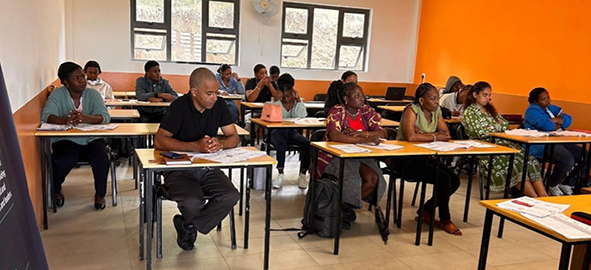
The intervention combines technical assistance, capacity building and market linkage strategies. A cornerstone of the project was the introduction of Hazard Analysis and Critical Control Points (HACCP) training, delivered by Polytechnics Mauritius. This included a technical workshop and on-site visits to six small and medium-sized enterprises (SMEs), providing tailored guidance to align operations with international food safety standards. Additionally, a three-day course on food safety fundamentals equipped 19 participants from diverse sectors with the knowledge to implement HACCP principles.
Beyond food safety, the project focused on entrepreneurial export skills development, training more than 50 entrepreneurs in modules covering export processes, market requirements and product design for international markets. Enterprise assessments and audits were conducted to gauge production structures and readiness for overseas trade.
The initiative also fostered collaboration among key stakeholders, including SME Mauritius Ltd, Invest Rodrigues, the Mauritius Research and Innovation Council, the Development Bank of Mauritius and private enterprises. By integrating practical training with strategic support, the project aims to position Rodriguan products in premium markets, enhance trade connectivity and create a sustainable export culture that benefits local communities.
Key results and impact
The Rodrigues Export and Market Development Project has delivered significant and measurable outcomes that are already transforming the island’s economic landscape. In terms of capacity building, more than 50 entrepreneurs participated in comprehensive export skills training, gaining practical knowledge on export processes, market entry strategies and product design tailored for international markets. Additionally, 19 participants from diverse sectors were equipped with food safety fundamentals and the expertise to implement Hazard Analysis and Critical Control Points (HACCP) principles in their businesses.
The project also conducted enterprise assessments and audits for six SMEs, providing tailored recommendations to align production processes with global food safety standards. Businesses such as Nature’s Spells Ltd and Miel Victoria Ltée reported tangible improvements in operational practices following these audits. Furthermore, a train-the-trainer programme created a local pool of HACCP experts, ensuring sustainability and continued compliance beyond the project’s initial phase.
Qualitatively, the initiative strengthened Rodrigues’ food safety ecosystem, enhanced competitiveness in the food and hospitality sectors, and fostered a culture of quality and innovation among micro, small and medium-sized enterprises (MSMEs). These interventions have enabled Rodriguan products to access premium markets, including diaspora and luxury segments, thereby diversifying income streams and creating new employment opportunities.
By improving institutional capacity and market readiness, the project contributes directly to Sustainable Development Goal (SDG) 8 (Decent Work and Economic Growth) and SDG 12 (Responsible Consumption and Production), reinforcing the Commonwealth’s commitment to inclusive and sustainable development for small states.
Lessons learned and next steps
The Rodrigues Export and Market Development Project highlighted several critical success factors. First, strong government ownership through the Rodrigues Regional Assembly ensured alignment with local priorities and facilitated access to resources such as industrial space and permits. Second, multi-stakeholder collaboration proved essential, with institutions like SME Mauritius, Invest Rodrigues and Polytechnics Mauritius contributing expertise and support. Third, the emphasis on practical, hands-on training tailored to local enterprises was a key driver of impact, enabling participants to immediately apply HACCP principles and export strategies in real-world settings.
Another important lesson was the importance of knowledge sharing and peer learning, demonstrated through case studies like Seskel Enterprise Limited’s successful export journey. This example inspired other entrepreneurs and reinforced the importance of compliance with international standards for market access.
Looking ahead, the next steps include scaling up HACCP certification across more businesses, expanding branding and packaging support, and strengthening digital trade connectivity. Plans are also underway to organise trade fairs and networking events to link Rodriguan producers with international buyers. Continued technical assistance and capacity building through 2026 will ensure sustainability. This model offers a replicable approach for other small states seeking to enhance export competitiveness and food safety standards.
3.2 Enhancing digital engagement for investment promotion in Antigua and Barbuda
Context and challenge
Antigua and Barbuda, like many small states, faces challenges in attracting sustainable investment and supporting local enterprises. Limited fiscal space and reliance on traditional business support models have constrained economic diversification and growth. The Antigua and Barbuda Investment Authority (ABIA), established in 2006, serves as the country’s primary business support organisation (BSO), tasked with promoting investment and assisting small and medium-sized enterprises (SMEs).6 However, by 2024 ABIA’s digital infrastructure was outdated: its website was over a decade old, lacked interactive features, and could not collect investor feedback. Additionally, the absence of online training resources for SMEs represented a missed opportunity to build entrepreneurial capacity. These gaps hindered ABIA’s ability to deliver responsive services and showcase Antigua and Barbuda as a competitive investment destination.
Recognising these challenges, ABIA sought technical assistance from the Commonwealth Secretariat to strengthen the business ecosystem in the country through support to the Authority. The intervention aligns with broader Commonwealth priorities, including digital transformation, sustainable development and economic resilience, by equipping small states with tools to modernise service delivery, empower SMEs and attract investment that supports long-term prosperity.
The intervention
The initiative was implemented in two phases between April 2024 and early 2025 to modernise ABIA’s digital engagement and strengthen its role as a responsive business support organisation.
Phase 1 included the development of an online training library for SMEs, including procurement of high-quality materials on financial literacy, marketing and compliance.
Phase 2 involved a comprehensive upgrade of ABIA’s website to improve usability, integrate interactive training content and embed data analytics for stakeholder feedback.
The Commonwealth Secretariat provided technical assistance and capacity building, ensuring ABIA staff could manage and update digital tools independently following the completion of the project. Partners included the ABIA, technical consultants and Commonwealth support teams, working collaboratively to deliver a sustainable solution.
Key features of the redesigned platform included:
- a modern, user-friendly interface showcasing investment opportunities
- interactive training modules for SMEs and entrepreneurs
- call-to-action tools to streamline investment processes
- analytics for tracking engagement and informing service improvements.
The upgraded promotional tools incorporated data analytics and user engagement metrics to monitor investor interactions, enabling ABIA to assess patterns of interest and identify businesses that demonstrate investment readiness for targeted support.
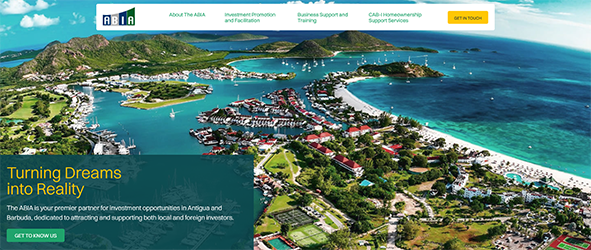
Furthermore, the intervention introduced innovative elements such as digital learning, data-driven decision-making and remote capacity building supported by recorded tutorials. These features have positioned ABIA as a forward-looking, investor-friendly agency capable of promoting Antigua and Barbuda as a competitive investment destination while empowering SMEs to grow strategically.
Key results and impact
The intervention delivered significant outcomes during 2024/2025.
- Website upgrade: a fully redesigned platform now highlights investment sectors and projects, simplifies regulatory navigation and provides real-time updates. The site integrates data analytics tools, enabling ABIA to track engagement and identify investor readiness.
- Online training library: regular training courses are now widely accessible to local SMEs, covering financial literacy, marketing and compliance and, ultimately, improving business planning and operational efficiency.
- Capacity building: 10 ABIA staff members completed remote training sessions and received recorded tutorials, ensuring long-term sustainability and independent content management.
- Enhanced engagement: analytics-driven insights allow ABIA to tailor services, respond to investor queries faster and design targeted outreach strategies.
Qualitatively, the initiative has strengthened institutional capacity, improved responsiveness and positioned ABIA as a modern, investor-friendly agency. For Antigua and Barbuda, these improvements foster economic resilience by diversifying investment opportunities and empowering SMEs to grow strategically. The intervention supports SDG 8 (Decent Work and Economic Growth) and SDG 9 (Industry, Innovation and Infrastructure) by promoting inclusive growth and digital transformation. Ultimately, the project enhances livelihoods, builds confidence among investors and demonstrates how technology can empower small states to compete globally.
Lessons learned and next steps
Several factors contributed to the initiative’s impact, including strong government ownership ensuring alignment with national priorities, while targeted technical assistance and capacity building created a sustainable foundation for digital transformation. The use of innovative digital tools proved essential for improving service delivery, enhancing investor confidence and empowering SMEs. Online training on website management was particularly effective, enabling ABIA staff to maintain and update content independently without ongoing external support. Ensuring regular communication with project partners, including clear guidance on Commonwealth procurement policies, was also critical to maintain agreed timelines and achieve delivery within compliance requirements.
Looking ahead, expanding online training to include advanced modules on export readiness and investment compliance could be considered, alongside introducing multilingual content to attract a broader investor base. Regional knowledge-sharing platforms are also being explored to foster collaboration among Caribbean small states. These steps will deepen the impact and ensure continued relevance in a rapidly evolving digital economy.
This experience offers a replicable model for other small states seeking to modernise investment promotion and SME support. By combining technical assistance, capacity building and innovative digital solutions, the initiative demonstrates how small states can overcome resource constraints and leverage technology to achieve inclusive growth and resilience.
3.3 Caribbean debt data transparency boost
Context and challenge
Caribbean small states are highly exposed to external shocks, including natural disasters that can quickly strain public finances and raise borrowing needs. In this context, debt transparency and high-quality debt data are essential – not only for internal decision-making but for maintaining confidence among citizens, creditors and development partners.
Across the region, debt management offices often face practical constraints that affect the quality, consistency and accessibility of debt information – especially when multiple institutions and stakeholders require timely, accurate reporting. As highlighted by the Commonwealth Secretariat, in a region experiencing severe climate impacts each year, disasters can trigger fiscal distress, making accountability and data-driven borrowing decisions even more important for resilience and recovery planning.
This challenge is strongly aligned with broader Commonwealth priorities around sustainable development financing, stronger public financial management and building resilience through better governance and systems – ensuring that public debt supports development rather than undermining it.
The intervention
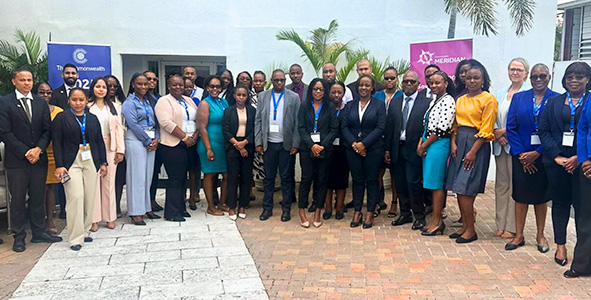
To strengthen debt transparency and data quality, the Commonwealth Secretariat and the International Monetary Fund (IMF) co-organised an intensive regional workshop in May 2025 in Jamaica for public debt managers from across the Caribbean.7 This was also supported by the UK Foreign, Commonwealth and Development Office (FCDO) and technical experts from the World Bank and the Caribbean Development Bank, bringing a strong mix of global and regional best practice.
The Commonwealth Secretariat provided technical leadership and delivered practical training focused on improving debt data quality, transparency and reporting through modern tools and workflows.
The workshop centred on Commonwealth Meridian, a web-based public debt management system used by all but one participating country. The training was explicitly hands-on, focusing on Meridian’s latest features to make debt data more reliable and accessible, strengthening trust with stakeholders and improving office-level processes and reporting standards.
Key results and impact
The workshop produced tangible regional outcomes during 2025 by building skills, strengthening peer learning, and accelerating use of modern debt tools.
- Thirty-three public debt managers from 16 Caribbean countries were trained, creating a cross-country cohort equipped to apply consistent approaches to debt data quality and transparency.
- The programme included participation from the Eastern Caribbean Central Bank and the UK Overseas Territories in the Caribbean, strengthening co-ordination and knowledge sharing beyond national debt offices alone.
- Participants received practical training on Meridian to strengthen their ability to produce debt information that is more reliable and easier to access, supporting better engagement with creditors, investors and citizens.
- The training reinforced the evolving role of debt managers as strategic partners for policy – linking stronger debt data to prudent debt management and better policy-making.
- The intervention also connected debt transparency to resilience: improved data and reporting help governments make more strategic, data-driven borrowing decisions in environments where climate shocks can rapidly worsen fiscal pressures.
For small states, these improvements directly support credible fiscal planning, stronger accountability and better alignment between borrowing choices and national development goals – key ingredients for progress toward the SDGs in a high-shock environment.
Lessons learned
- Hands-on systems training (not just policy discussion) is critical. Focusing on real workflows and system features helps staff immediately improve reporting practices and data reliability.
- Regional peer learning adds value for small states. Bringing multiple countries together accelerates knowledge transfer and helps standardise good practices across a shared debt- and climate-risk context.
- Multi-partner delivery strengthens impact. Combining Commonwealth and IMF expertise with contributions from the World Bank and Caribbean Development Bank helped connect systems skills to broader best practice and development planning.
Next steps
The plan is to continue strengthening institutional use of Meridian and debt transparency practices through ongoing technical assistance and targeted training, reflecting the Commonwealth’s wider focus on ensuring debt supports development outcomes.
This regional training approach anchored in a shared digital system – and backed by trusted partners – can serve as a replicable model for other Commonwealth small states seeking to improve debt transparency quickly and sustainably.
3.4 Supporting small states in developing and negotiating critical minerals regulations
Context and challenge
The rapid global shift to clean energy technologies (electric vehicles, offshore wind, solar photovoltaics, grid-scale batteries) has triggered an unprecedented demand for critical minerals, including cobalt, nickel, manganese, copper and rare earth elements. These minerals underpin modern decarbonisation systems and are central to the strategic industrial policies of major economies. While terrestrial supplies remain the backbone of current markets, rising geopolitical competition, environmental pressures, unstable production profiles and supply concentration have prompted renewed interest in seabed minerals as a potential supplementary source.
For many small states in the Commonwealth, seabed mineral deposits such as polymetallic nodules, cobalt-rich crusts and seafloor massive sulphides represent a rare strategic asset. These resources offer the possibility of economic diversification, participation in emerging low-carbon value chains, and enhanced resilience against external shocks.
However, seabed mineral development is technically complex, environmentally sensitive and governed by evolving international rules led by the International Seabed Authority (ISA). Several structural and governance challenges complicate the ability of small states to develop their national seabed mineral resources or meaningfully participate in the governance of international seabed minerals and benefit from the sector. Those challenges include the following.
- The high regulatory and technical complexity of regulating seabed mining.
- Limited capacity to meaningfully participate in the setting of international rules, regulations and procedures at the ISA.
- Asymmetric power relations with seabed mining investors/contractors.
- Lack of effective fiscal frameworks to ensure the economic benefits of seabed mining are maximised
- The absence of domestic economic linkages to promote value addition.
These challenges risk marginalising small states in a sector that could shape the future global critical minerals landscape.
The intervention
Recognising the distinct challenges that small states face in engaging with the emerging seabed minerals sector, the Commonwealth Secretariat has provided targeted, demand-driven support across several areas. This assistance focuses on strengthening legal, fiscal and institutional frameworks, building negotiation and regulatory capacity and supporting strategic national planning. These interventions aim to ensure that small states can safeguard their marine environments, articulate their priorities in global forums and secure fair and equitable benefits from seabed mineral opportunities.
In Cook Islands, for example, the Secretariat supported the government in designing a comprehensive regulatory framework for seabed minerals within its national jurisdiction. This included technical input into several pieces of subsidiary legislation to operationalise the country’s primary seabed minerals law and establish clear environmental, licensing and compliance procedures.
The Secretariat also continues to assist small states (both individually and collectively, including through support to the African Group of States) by supporting co-ordinated interventions during negotiations on the ISA Mining Code.8 This work helps ensure that the perspectives and development needs of small and vulnerable states are effectively reflected in the evolving governance regime for seabed mining in the international seabed area.
Results and impact
The Secretariat’s support has delivered tangible outcomes for small states.
Strengthened legal and regulatory frameworks. In Cook Islands, the refinement of subsidiary regulations has improved legal certainty for government, communities and potential contractors, while embedding stronger environmental management provisions. Assistance to Kiribati on the development of subsidiary regulations governing fees, royalties, financial guarantees, liability and revenue management associated with seabed mineral activities has also been delivered to the government.
Enhanced negotiation capacity at the ISA. Through targeted briefings, drafting support and technical inputs, small states now participate more confidently in ISA negotiations. Their interventions are more analytically robust, better aligned with national interests and more consistent with evolving international standards. This has helped ensure that small states perspectives have been reflected in the shaping of the Mining Code.
Increased visibility and influence of small states. By supporting group positions (for example, the African Group) and enabling co-ordinated engagement, the Secretariat has amplified the collective voice of small states in multilateral processes. This has strengthened their ability to influence discussions on environmental thresholds, benefit-sharing arrangements and compliance mechanisms.
Improved policy coherence and strategic planning. The Secretariat’s advisory work has helped small states integrate seabed minerals into broader national planning processes, including ocean governance frameworks. This is improving policy coherence and positioning states to make better informed decisions about seabed minerals.
Foundations for environmental stewardship. By strengthening environmental safeguards within regulatory frameworks, the Secretariat has supported small states in fulfilling their role as custodians of fragile marine ecosystems, helping them to balance potential economic opportunities with long-term ecological responsibility.
Expanded institutional and human capacity. Through the Commonwealth’s eLearning modules on deep seabed minerals,9 mentoring and thematic training sessions, officials in small states have greater familiarity with seabed mineral governance, environmental management concepts, contracting risks and due diligence requirements. This growing institutional capacity reduces reliance on external actors and enhances national ownership of regulatory processes.
As the global demand for critical minerals intensifies, seabed minerals present both opportunities and complex governance challenges for small states. The Commonwealth Secretariat’s targeted support has helped small states build the legal, technical and institutional foundations needed to navigate this evolving landscape. There will be continued assistance in this area to ensure that small states remain informed, resilient and influential actors in shaping the future of critical minerals governance while safeguarding the health and integrity of their marine environments.
3.5 Supporting an energy and climate secure future for small island developing states
Context and challenge
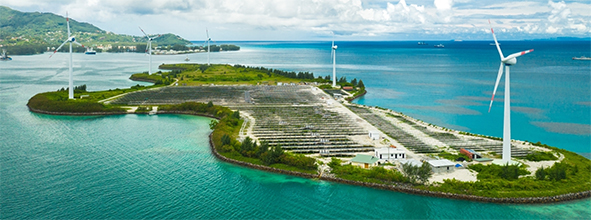
Of the Commonwealth’s 33 small states, 25 are small island developing states (SIDS). The path to sustainable development for SIDS has been shaped by a long-standing reliance on imported fossil fuels. For decades, these islands have had little choice but to power their economies with costly imported diesel, leaving them exposed to price spikes, supply disruptions and mounting fiscal pressures. Seychelles is one such example: with no domestic oil production, it must import all its petroleum, representing up to 95 per cent of its total primary energy supply and accounting for more than 6–10 per cent of gross domestic product (GDP).
Despite the strong political will for change among small island developing states (SIDS), with many having committed to ambitious renewable energy targets of 100 per cent by 2030 and Net Zero by 2050, their transition away from fossil fuels remains difficult due to multiple factors. Key among these are the lack of access to appropriate financing for energy transition investment, their small size, geographic isolation and economic vulnerability. Investors often perceive small island markets as high risk, given their exposure to climate impacts, limited credit ratings and small market size, which makes projects less commercially viable. The absence of economies of scale further compounds these challenges, as small populations and dispersed islands increase per-unit costs for infrastructure, technology and service delivery while governments struggle with limited technical capacity and overstretched institutions.
These intertwined challenges make the shift by SIDS from fossil fuels to domestically produced renewable energy both urgent and difficult. Achieving energy security, affordability and efficiency is essential for SIDS – not only to meet climate goals, but also to transform energy from a constraint into an enabler of sustainable development and inclusive growth.
The intervention: the CSET Power and Transport Toolkits
Recognising these barriers, the Commonwealth Secretariat identified a critical need for affordable, rapid, investment-ready, evidence-based clean energy business prospectuses. To address this need, The Commonwealth Sustainable Energy Transition (CSET) developed the Power and Transport Sector Toolkits, designed in partnership with SEforALL (Sustainable Energy for All).10 The aim of the toolkits is to demonstrate that, despite challenges, investing in the energy transition of SIDS can be economically beneficial. The toolkits provide clear pathways for initiatives that de-risk investment and highlight government policy support to streamline change, strengthen energy security, and improve access, efficiency and sustainability.
Key results and impact
The toolkits deployed in Barbados, Dominica, Seychelles and Antigua and Barbuda supported the development of investment promotion business prospectuses that outlined the economic case, business opportunities, and economic and policy frameworks for clean energy investments. These investments aim at reducing emissions, primarily in the power and transportation sectors, contributing to the achievement of the countries’ 2030 renewable energy goals and 2050 Net Zero targets. The toolkits estimated the financial returns from clean energy investments, including reduced fossil fuel import bills, improved foreign exchange retention and long-term operational savings. In addition, they quantified expected reductions in carbon emissions, improvements in water-use efficiency, and the job-creation potential associated with the transition to cleaner power and transport systems.
In Antigua and Barbuda, the clean energy investment promotion prospectus focused on transport interventions, outlining a robust business case that advances the country’s clean mobility agenda. It contributes to the realisation of a national mobility strategy and highlights supportive regulations, tax incentives and import policies to accelerate electric mobility. The prospectus identifies the need for expanded solar generation, nationwide electric vehicle (EV) charging infrastructure and modernised grid systems capable of supporting decentralised renewable energy. It also identifies opportunities to mobilise green finance through public–private partnerships and climate funds, while proposing consumer-focused incentives to accelerate electric vehicle adoption. In addition, capacity-building initiatives – such as vocational training programmes and partnerships with regional institutions – further strengthen national readiness.
The Commonwealth’s Power and Transport Toolkits offer cost-effective, time-efficient solutions for developing robust business cases to accelerate the pace and scale of energy transition in small island developing states (SIDS). These toolkits help SIDS overcome critical barriers – such as limited fiscal space, small market size and perceived investment risks – through investment promotion prospectuses that set out clear economic and policy frameworks, including detailed cost–benefit analyses for clean energy investment and financing.
By equipping governments with practical support to plan, prioritise and attract investment in energy system transformation across the power and transport sectors, this technical support strengthens energy security, enhances sustainability and builds long-term economic resilience across SIDS. It empowers member countries to take control of their energy future rather than being constrained by it.
3.6 Strengthening climate finance mobility in Fiji
Context and challenge
Fiji, a small island developing state in the Pacific, faces acute vulnerabilities to climate change, including rising sea levels, saltwater intrusion and coastal erosion. These impacts threaten not only infrastructure and ecosystems but also the livelihoods and cultural heritage of its communities. For small states like Fiji, the challenge is compounded by limited fiscal space and constrained access to international climate finance, which hampers its ability to invest in long-term resilience and adaptation strategies.
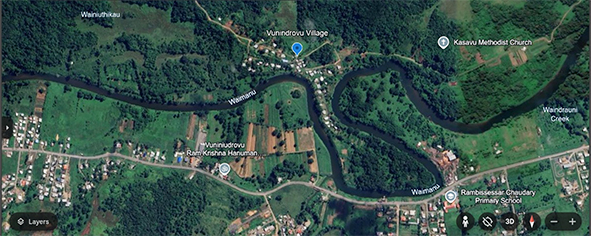
One of the most pressing development gaps has been the lack of direct funding mechanisms for community-led climate mobility and adaptation. In Fiji, several coastal communities, including Macuata-i-wai, have faced the harsh reality of needing to relocate due to rising sea levels, saltwater intrusion and coastal erosion. Despite strong national commitment to climate resilience, translating plans into action at the local level has remained difficult due to complex funding requirements, limited technical capacity and the absence of streamlined channels for community access to finance. These challenges underscore the urgent need for inclusive, locally driven solutions that empower vulnerable populations to adapt and rebuild in the face of climate-induced displacement.
The intervention
In response to the Fiji Government’s request for technical support in accessing climate finance, the Commonwealth Climate Finance Access Hub (CCFAH) deployed a Commonwealth National Climate Finance Adviser (CNCFA) to the Climate Change Division (CCD) of the Ministry of Environment. Serving from May 2023 to July 2025, the CNFCA worked alongside CCD colleagues, providing embedded assistance in proposal development, capacity building and strategic co-ordination. The adviser helped to strengthen institutional capacity and support Fiji’s goal of securing funding for community-led climate adaptation and mobility initiatives.
Over the 2024/2025 period of the adviser’s deployment, the CNFCA mobilised over US$8 million for Fiji, and advanced further proposals with strong prospects for funding in 2026.
Beyond financial achievements, the initiative strengthened institutional capacity within CCD, particularly the Programme Development Unit, through mentorship and hands-on proposal development. It also fostered deeper engagement between the government and communities, reinforcing inclusive planning and local ownership.
For Fiji, a small island state on the frontlines of climate change, these outcomes mark an important step toward safeguarding vulnerable communities through planned relocation to safer areas while preserving their cultural identity and way of life. By securing targeted funding for climate mobility, Fiji is not only enhancing resilience and advancing the Sustainable Development Goals (SDGs) but also ensuring that communities forced to move due to rising seas can rebuild with dignity, continuity and hope.
Lessons learned and next steps
Fiji’s experience with accessing climate mobility finance through the Community Climate Adaptation Facility (C-CAF) highlighted several key success factors.11
- Strong government ownership and leadership from the CCD ensured that national priorities guided the process.
- The embedded support from CCFAH enabled close collaboration, knowledge sharing and capacity building, particularly within the Programme Development Unit. This has now strengthened skills in proposal development.
A critical lesson was the value of direct engagement with communities. By involving local stakeholders from the outset, the proposals reflected real needs, enhanced trust and ownership and ensured faster implementation. The success of the community-funded projects demonstrates that targeted, locally driven approaches can unlock meaningful climate finance for vulnerable populations.
This experience offers a replicable model for other small states facing similar climate challenges. It shows that with the right partnerships, technical support and community engagement, even complex funding mechanisms can be navigated successfully to deliver tangible benefits on the ground.
3.7 Breaking barriers to climate finance: Namibia’s accreditation success story
Context and challenge
Namibia’s territory extends beyond 825,000km2, and its population of nearly 2.6 million is widely dispersed. It is an arid country with a highly skewed precipitation regime, ranging from less than 25mm of rainfall to a little more than 600mm annually, making it a water-scarce country. This worsens development challenges by slowing adaptation efforts and timely responses to extreme weather events, increasing risks, damage and loss of life.
The frequency and intensity of climate-related events continue to increase, resulting in substantial and escalating losses and damages. For instance, in 2018/2019, a total of 97,854 livestock perished due to drought.12 This livestock loss was preceded by two consecutive losses in 2012/13 and 2013/14, also due to drought, where the cost of the losses and damages was estimated at 1 billion Namibia dollars (N$).
To address the impacts of climate change and deliver on its Nationally Determined Contributions (NDC) ambition, Namibia requires increased implementation of priority actions on mitigation and adaptation and corresponding access to finance, technology and capacity building. Until July 2025, Namibia only had one direct access entity (DAE),13 the Environmental Investment Fund (EIF). The limited number of DAEs meant that access to climate finance was limited.
The intervention
To address this problem, the Commonwealth Climate Finance Access Hub (CCFAH), through its Commonwealth National Climate Finance Advisers in Namibia, successfully prepared and submitted a readiness proposal to the Green Climate Fund (GCF) in partnership with the EIF and under the leadership of the Ministry of Environment, Forestry and Tourism (MEFT). By helping Namibia expand its pool of DAEs and navigate the GCF accreditation processes, CCFAH is advancing the Commonwealth’s mandate to empower countries to mobilise climate finance, accelerate implementation of NDCs and build resilient national systems capable of driving sustainable, locally led climate action.
The objective of the readiness proposal was to access resources to support the accreditation process of four national institutions. These were the Development Bank of Namibia, Namibia Nature Foundation (NNF), the Agricultural Bank of Namibia (Agri-Bank), and Bank Windhoek. The institutions were supported with the accreditation process through the readiness guidelines accessed from the GCF. CCFAH led the preparation of the readiness proposal to support the accreditation pf the four nominated institutions and facilitated the Ministry of Environment, Forestry and Tourism’s successful application to become a GCF delivery partner. The resources mobilised through this effort have also contributed to a review of Namibia’s National Climate Change Policy. Throughout the intervention, the EIF and MEFT have served as key partners, with EIF acting as fund manager and implementer. Initiated in 2023, the process remained under implementation throughout 2025.
Key results and impact
The Development Bank of Namibia was accredited in July 2025 while MEFT was approved as a delivery partner for the GCF by March 2024. The other three national institutions – Agri-Bank, Bank Windhoek and NNF, which were nominated for accreditation as direct access entities in 2016 – successfully submitted their applications between 2024 and 2025 after receiving GCF readiness funding to accelerate the processes. The National Climate Change Policy is in the process of being revised, with the process expected to be completed in 2026.
The interventions will increase Namibia’s access to resources from the GCF, which are a key component to enable implementation of its NDC – leading to resilience and a low-emissions development pathway.
Lessons learned and next steps
Some notable insights from this process include the following.
- Consistent information sharing with key stakeholders at all stages was essential to securing the necessary buy-in and political support to obtain funding for the accreditation process and policy reforms.
- Other vulnerable and small states should prioritise DAE accreditation as the GCF increasingly prefers to channel climate finance through DAEs.
In consultation with the GCF, the accreditation process for Namibia’s Ministry of Finance is scheduled to begin in 2026, aligning with GCF’s preferred modality for future engagement.
Footnotes
5 See Commonwealth Secretariat (2024, January 23), ‘Empowering Rodriguans: A journey into the world of exports’, news release. https://thecommonwealth.org/news/empowering-rodriguans-journey-world-exports | [back]
6 See ABIA’s official website, https://investantiguabarbuda.org. | [back]
7 See Commonwealth Secretariat (2025, June 16), ‘16 Caribbean countries boost debt transparency with Commonwealth-IMF support’, news release. https://thecommonwealth.org/news/16-caribbean-countries-boost-debt-transparency-commonwealth-imf-support | [back]
8 See https://isa.org.jm/the-mining-code/. | [back]
9 These and other modules can be accessed via the Commonwealth eLearning Platform, https://cwlearn.commonwealth.int/login/index.php. | [back]
10 See Commonwealth Secretariat (2021, November 10), ‘New toolkit to boost clean energy investments in small island nations’, news release. https://thecommonwealth.org/press-release/new-toolkit-boost-clean-energy-investments-small-island-nations | [back]
11 See Fiji Government (2025, March 28), ‘Fiji Government welcomes C-CAF Initiative by Global Centre for Climate Mobility (GCCM)’, news release. https://www.fiji.gov.fj/Media-Centre/News/FIJI-GOVERNMENT-WELCOMES-C-CAF-INITIATIVE-BY-GLOBA | [back]
12 Office of the Prime Minister (2020), Drought relief programme 2019/2020, Republic of Namibia. | [back]
13 Direct access entities are sub-national, national or regional organisations that need to be nominated by developing country National Designated Authorities (NDAs) or focal points. | [back]