


This report provides an assessment of socio-economic trends in Commonwealth Small States within the wider global economic context. It reviews recent economic performance, including developments following the post-COVID-19 rebound, and considers the implications of moderating growth, the normalisation of tourism activity and increasing fragmentation in the global economy.
The report also examines how CWSS have responded to recent external shocks, including the trade tariffs and heightened trade uncertainty that characterised 2025, as well as the emergence of conflict in the Middle East in early 2026.
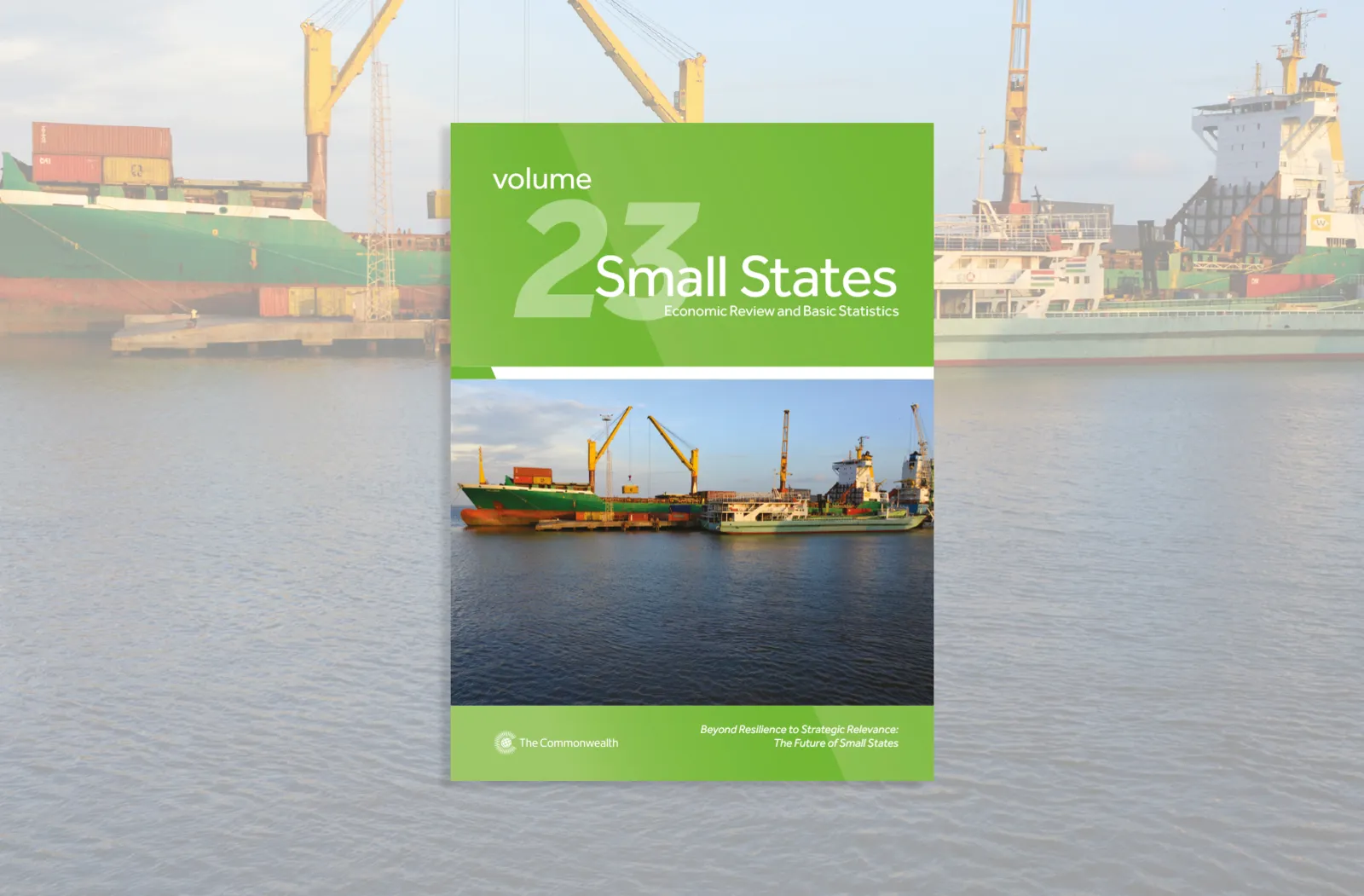
The inherent vulnerabilities of small states mean that building resilience remains crucial. However, it is equally critical to underscore that, despite these vulnerabilities, small states have the capacity to be strategically relevant globally, and to offer up lessons for other countries. This relevance is apparent in domains such as digital financial infrastructure, where small states have been early adopters, and innovative sustainable finance, where they have been credible issuers of blue and green instruments. This report therefore provides insight into how small states are moving beyond just being resilient, from what they can withstand to what they can contribute.
The first part of this report provides an overview of recent socio-economic trends in CWSS, as well as thematic issues shaping their development and innovations across CWSS in fintech, artificial intelligence and sustainable financing.
The second part focuses on innovative investment partnerships, with a particular emphasis on public–private partnerships in small states. This is in line with the theme for the 2026 Commonwealth Heads of Government Meeting of ‘Accelerating Partnerships and Investment for a Prosperous Commonwealth.’