



The report charts the Commonwealth’s programme of renewal under Secretary-General Shirley Botchwey, setting out how the organisation is responding to growing geopolitical fragmentation, economic uncertainty, climate change and declining trust in institutions.
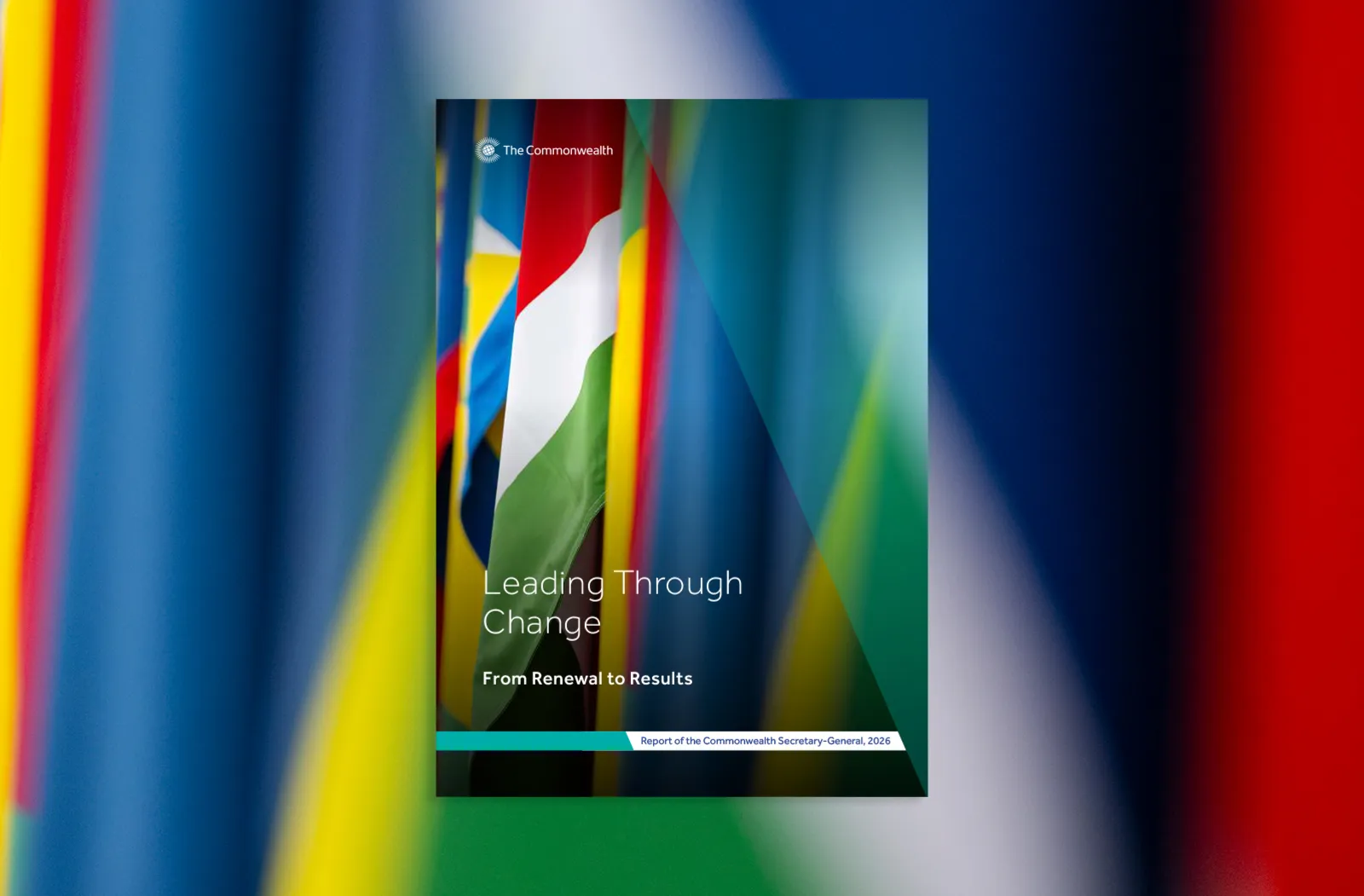
Central to this renewal is the Commonwealth Secretariat Strategic Plan 2025–2030, which concentrates activity on three interconnected priorities: democratic, economic and environmental resilience, underpinned by support for young people, women, small and vulnerable states.
Members asked for focus, discipline and results. Together, we are responding.Share on Twitter
The Secretary-General's delivery on her commitments includes electoral assistance to nine member countries, new approaches to democratic resilience, initiatives to expand trade and investment and stronger support for debt management. Climate action remains a key focus: the Commonwealth Climate Finance Access Hub has mobilised more than US$644 million, while work on ocean governance, sustainable energy and climate finance is expanding. The Secretariat is also strengthening youth participation, gender equality and support for small states.
Internally, reforms are creating a more focused, accountable and results-driven Secretariat, supported by stronger monitoring, partnerships and resource mobilisation. Looking ahead, the Secretariat aims to anticipate emerging challenges, unlock investment and trade, accelerate the green transition, equip young people for an AI-enabled economy and use its convening power to turn international co-operation into practical benefits for its 2.7 billion citizens.
Eighteen months ago, Commonwealth leaders entrusted me with a mandate to renew our institution so it could serve our countries with greater focus, urgency and transformative effect. I accepted that responsibility with humility and a conviction, honed as Ghana’s Foreign Minister, that nations prosper when they work together.
Since taking office, that conviction has deepened. The international order, which had not delivered the stability, fairness, opportunity, growth and prosperity our people in the developing world expected, no longer works for any of our countries. Now even the predictability that has been its strength is breaking down. Climate shocks erase years of development. Debt blocks investment. Conflict disrupts supplies of food and energy. We are increasingly exposed to forces no nation can control alone.
For many, the instinctive response is retreat: to raise barriers and narrow our horizons. For some, the solution is to recreate a more democratic version of the old system, with winners and losers. It is understandable, but it mistakes the nature of the problem. Interdependence cannot be repealed. Protectionism may promise control, but in practice it fragments markets, raises costs and leaves countries more vulnerable to decisions taken elsewhere.
The choice is not between national strength and international co-operation. Properly organised, co-operation is how nations build strength. The question is whether the terms of that co-operation are fair, purposeful and capable of delivering.
We can shape rules, unlock investment and widen the choices available to every member.Share on Twitter
This is where the Commonwealth has a distinctive role. Our 56 countries span every region and stage of development but meet on equal terms. Our shared values, institutions and networks – built across more than seven decades – create trust. When we organise that trust behind common priorities, we can shape rules, unlock investment and widen the choices available to every member.
Members asked for focus, discipline and results. Together, we are responding. Our nations agreed a new Strategic Plan centred on democratic, economic and environmental resilience, with young people, women and small and vulnerable states at its heart. We are reshaping the Secretariat around delivery and accountability, focusing meetings on outcomes and building partnerships that bring expertise and investment to national priorities.
Early results show the progress we are making. We have supported nine member countries on electoral integrity. Intra-Commonwealth trade is increasing. This year alone, the Commonwealth Climate Finance Access Hub has mobilised almost US$100 million and supported the approval of 15 projects. Across our work, ministers are turning agreement into action.
These results belong to a wide partnership. Member governments set the direction; our institutions and networks bring experience, innovation and reach; partners add capital and capability. My responsibility is to bring those strengths together and ensure that co-operation leads to resilience and shared prosperity across the Commonwealth.
The Commonwealth is ready for the next phase.Share on Twitter
As we meet in Antigua and Barbuda, the Commonwealth is ready for the next phase. We have laid stronger foundations. Now we must use them to promote democracy, expand trade and investment, secure fairer finance and lead global action for those most exposed to climate change. The progress outlined in this report shows that the means to achieve these ambitions exist across our family – our task is to organise them behind a common purpose.
Our Commonwealth endures because its purpose reaches beyond the interests of any one government or generation. It has never stood still. Each set of leaders has renewed it, drawing fresh strength from shared values, common interests and the capacity of sovereign nations to act together while remaining proudly independent. Those bonds have carried us through profound change.
Today, stronger purpose and deeper partnerships are creating fresh momentum across our family. We must sustain it and fulfil the Commonwealth’s potential, matching our effort to the urgency of this moment – with the fortitude to withstand the pressures of our age and the confidence to shape what comes next.
At a time when the choices available to many countries are narrowing, our purpose is to widen them. That progress lies within our power. I look forward to achieving it with you."
The Hon. Shirley Botchwey,
Secretary-General of the Commonwealth