

The publication of the second edition of the Curriculum Framework for the Sustainable Development Goals (SDGs) represents a significant step forward in the ongoing transformation of education as an essential driver for sustainable development throughout the Commonwealth.
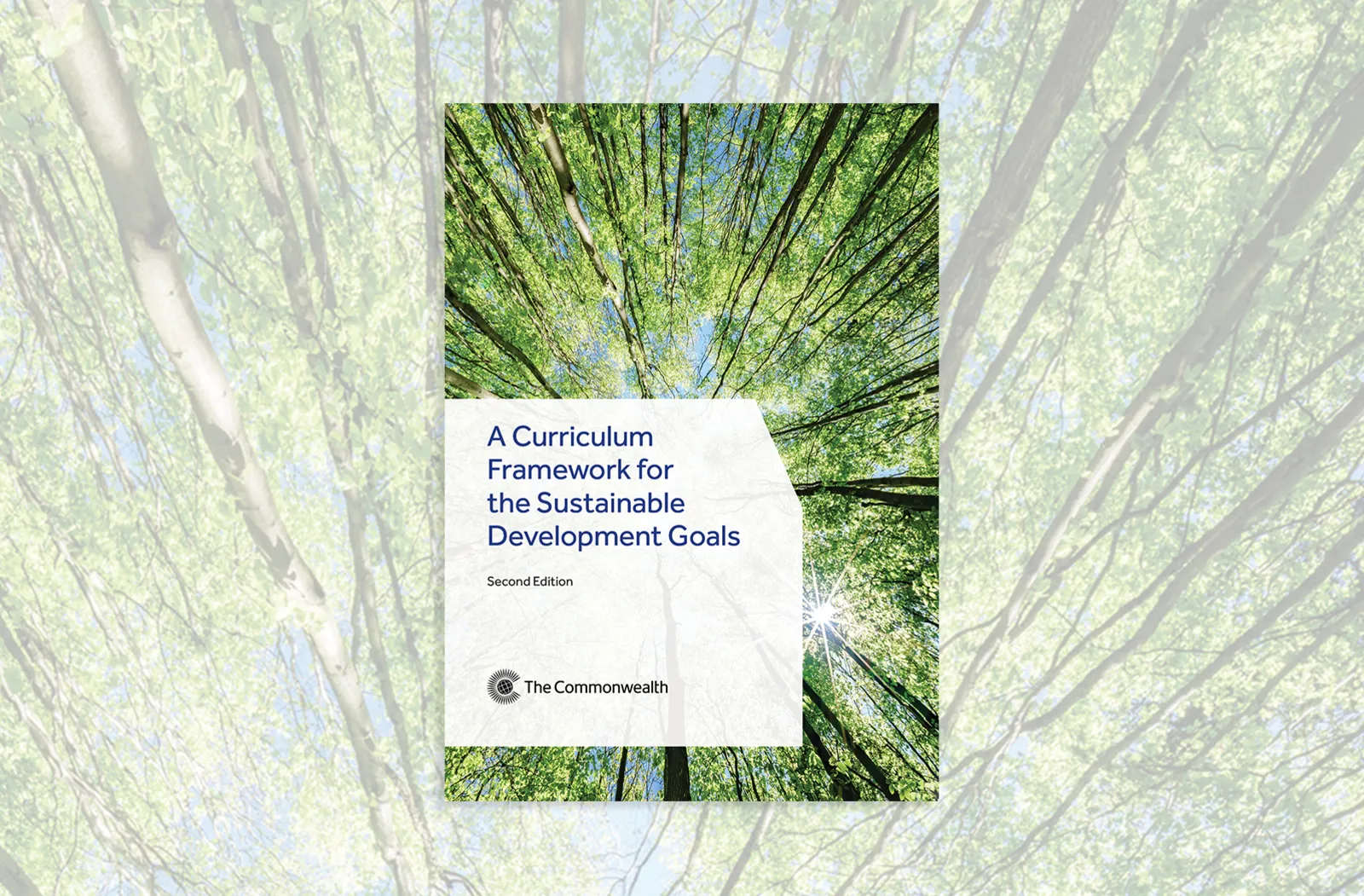
Building on the foundation laid by the first edition, this updated framework demonstrates the evolving role of education in uniting communities and nations around a shared vision for a sustainable and prosperous future.
At its core, the framework is a curriculum-mapping tool rather than a syllabus: it sets out what learners should understand, be able to do, and value in relation to sustainable development. It comprises competency matrices for each of the 17 SDGs, which organise learning into three domains (knowledge and understanding, skills and applications, values and attitudes) and map these domains across stages of education (early childhood, primary, secondary, TVET, tertiary, and adult learning).
Since its launch, the framework has been adopted by many countries worldwide and adapted to their needs. It has helped change how lessons are taught and what students learn in countries such as Canada, Indonesia, Namibia, New Zealand, Nigeria, the Philippines, and Taiwan. It has been used in many ways. For example, in New Zealand, it’s helped shape how physiotherapy students learn about health and wellbeing. In the Philippines, it’s been used to check how science classes align with the SDGs, and in Indonesia, teachers have used it to integrate sustainable development ideas into maths lessons.
Across the Commonwealth, the framework has strengthened curriculum design, teacher education, and the systematic integration of sustainability competencies in schools, technical and vocational education, and higher education.
The Commonwealth Secretary-General, Hon Shirley Botchwey, described the framework as “both a powerful tool and a call to action”, saying:
“It affirms the Commonwealth’s enduring belief that education can light the path towards a resilient, inclusive and thriving future for all.”
Education: A catalyst for all SDGs in a changing world
First launched as a pilot in Fiji in 2016, the Curriculum Framework was designed as a roadmap for reimagining education—one that enables every learner, at every stage of life, to contribute meaningfully to a sustainable future.
Now, at a time of profound global change, the updated framework directly addresses challenges such as climate change, environmental degradation, and social and economic inequalities that impede educational opportunity and participation. It equips learners with the knowledge, competencies, and values needed to navigate an increasingly complex and interconnected world, bridging global aspirations with national and local priorities.
The framework’s philosophy emphasises that sustainability should not be treated merely as a topic of discussion. Instead, it should integrate both content and process to increase the likelihood of meaningful and lasting engagement. The framework stresses that sustainability cannot be imposed on local communities; it must be inclusive and grounded in respect for local and traditional knowledge. Recent research highlights the Curriculum Framework’s practical value and flexibility. A study published in December 2025 shows how the first edition of the Framework supported the integration of the SDGs into primary school curricula in Nigeria, helping teachers revisit what they already teach and clarify the SDGs by focusing on what pupils learn, practise, and value. Using real classroom examples linked to issues such as poverty, health, gender equality, and climate action, the study shows the Framework’s tangible impact: not by adding new subjects, but by improving how existing lessons are taught so that pupils can apply what they learn in their schools and communities.
An invitation to act
More than a technical resource, the second edition of the Curriculum Framework for the SDGs is an invitation for educators, policymakers, institutions, communities, and learners to work together in shaping education systems that are responsive, inclusive, and future-oriented.
It also reaffirms the Commonwealth’s vision that every learner, at every stage of life, can contribute to building a resilient, inclusive, and thriving world.
A Curriculum Framework for the Sustainable Development Goals: Second Edition