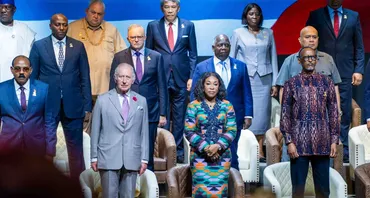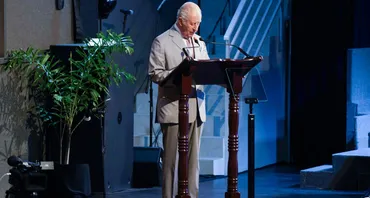


Address by the Rt Hon. Gaston Browne, Prime Minister of Antigua and Barbuda, at the opening of the 28th Commonwealth Heads of Government Meeting 2026, at St John’s, Antigua and Barbuda on 3 November 2026.
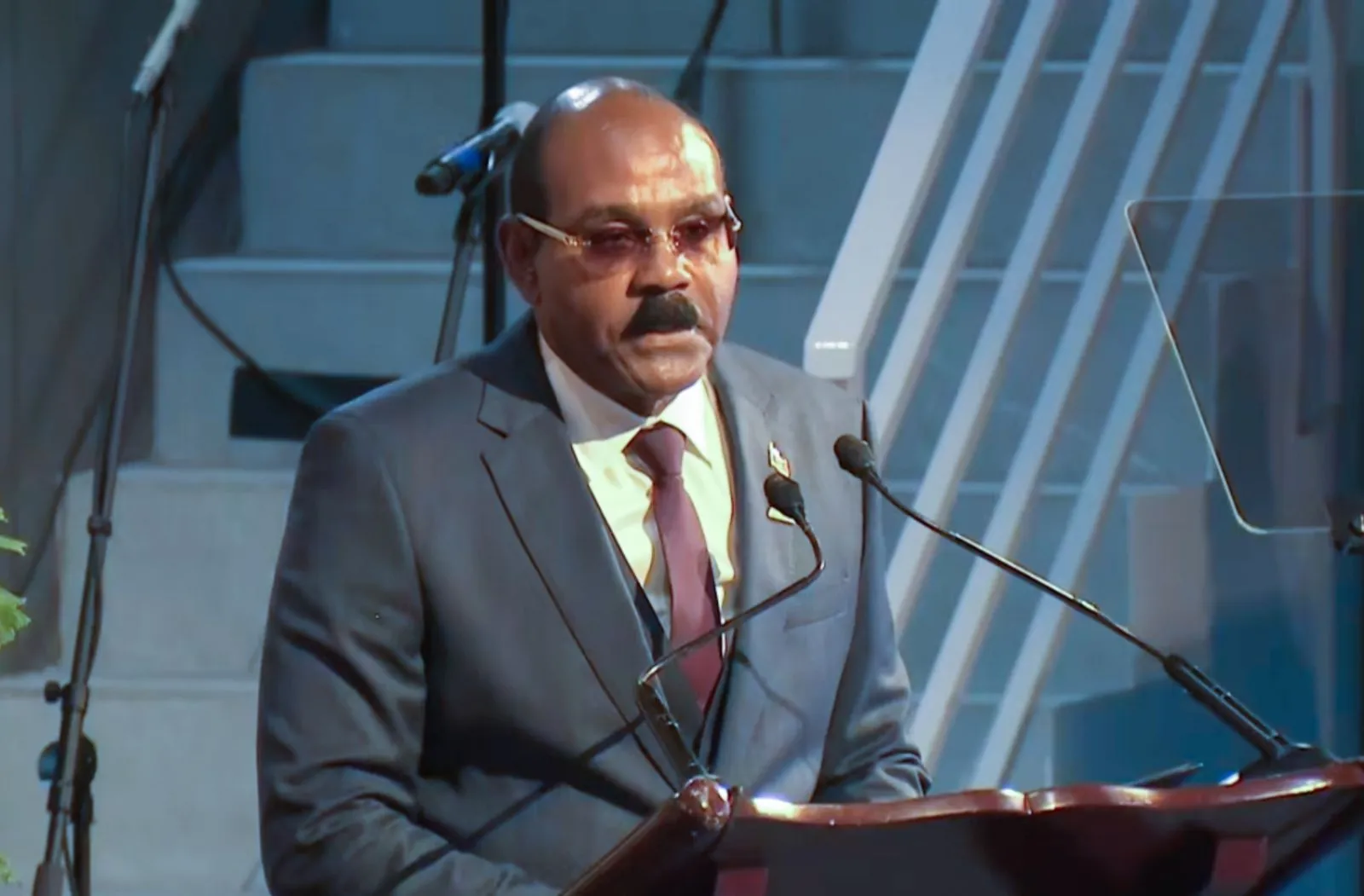
On behalf of the Government and people of Antigua and Barbuda, I extend to you a warm and heartfelt welcome.
We meet with gratitude to Samoa for its stewardship of the Commonwealth over the past two years, and with appreciation for the leadership of our Secretary-General, Shirley Ayorkor Botchwey, as we embark on a new chapter of cooperation.
Your Majesty, we are deeply honoured by your presence as Head of the Commonwealth, together with Her Majesty the Queen. Your presence affirms the enduring bonds that unite our diverse family of nations.
For Antigua and Barbuda, hosting this meeting is more than a privilege.
It is an expression of a fundamental principle: countries whose futures are shaped by international decisions must have a meaningful voice in making them.
We gather at a time when global power remains unequal, national interests increasingly compete, and the foundations of international cooperation are under strain.
From these Caribbean shores, we understand how decisions taken far beyond our borders, can profoundly affect our people. Conflicts destroy lives and disrupt economies.
Supply-chain disruptions drive up prices. Debt constrains national choices. Climate change threatens livelihoods, development and, for vulnerable states, our very survival.
Yet the truth is that no nation, however powerful, can prosper in isolation. All depend on reliable partners, secure markets, resilient supply chains and a stable international order.
We may not agree on everything, but we must recognise that we can achieve far more through cooperation than through confrontation.
Some question whether the Commonwealth remains relevant. Our answer must not rest on history or sentiment alone.
It must be demonstrated through results: in the opportunities we create, the partnerships we forge and the tangible improvements we deliver in the lives of our people.
Our Commonwealth has helped strengthen democratic institutions, uphold the rule of law, provide technical assistance and amplify the concerns of small states. We must build on that legacy and make our association a more consequential force for global stability, shared prosperity and international cooperation.
Our theme, “Accelerating Partnerships and Investment for a Prosperous Commonwealth,” provides a clear direction. Across our 56 member nations lie immense opportunities: capital, markets, productive capacity, scientific knowledge and human talent. The resources are there. The needs are there. What is required is the collective will to connect them.
Let us expand trade among ourselves, simplify customs procedures, strengthen transport links and improve access to trade finance, particularly for small and medium-sized enterprises. Let us establish predictable investment frameworks that encourage businesses to invest, innovate and create jobs.
Larger economies can secure reliable suppliers and new investment opportunities. Smaller economies can access wider markets, attract productive capital and expand their economic potential.
Commonwealth cooperation must deliver meaningful benefits for every member, regardless of size or economic strength. The Secretariat’s investment platform provides an opportunity to connect viable projects with willing investors.
Let us turn those opportunities into productive enterprises, decent jobs and lasting prosperity. And let us establish clear responsibilities, realistic timelines and measurable outcomes, reporting progress between our meetings.
A Commonwealth connection must do more than open doors. It must create opportunities; and those opportunities must translate into livelihoods.
Fellow Heads of Government:
Our pursuit of prosperity must also recognise the vulnerabilities that threaten to erase decades of development in a matter of hours. A single hurricane can devastate infrastructure, destroy livelihoods and force governments to divert resources from education, healthcare and economic transformation towards recovery.
National income alone cannot adequately measure a country’s vulnerability or its capacity to withstand repeated shocks.
We must therefore advance the wider use of the Multidimensional Vulnerability Index alongside existing financing criteria, while pressing for faster access to climate finance and debt arrangements that give vulnerable countries the fiscal space to recover and rebuild.
No nation should be forced to mortgage its future simply to survive the present.
Those members with capital, technology and influence in international financial institutions, have an important role to play in advancing these reforms. Investment in renewable energy and resilient infrastructure is equally essential. It can protect communities, reduce dependence on imported fossil fuels, strengthen energy security and create new opportunities for enterprise.
But resilience alone is not enough. We must also confront the causes of climate change by accelerating the transition to cleaner energy and reducing global emissions. Fairness also requires an honest engagement with our shared history.
In Samoa, we agreed that the time had come for a meaningful, truthful and respectful conversation on reparatory justice.
We must now carry that commitment forward through structured, inclusive dialogue on the enduring consequences of slavery and colonialism, with a determination to make progress and a willingness to build consensus.
Excellencies:
The future of the Commonwealth must also be measured by the opportunities it creates for our young people. Through scholarships, research partnerships, professional exchanges and access to digital technology, we can equip a new generation to build businesses, advance scientific discovery and strengthen public institutions. Women must enjoy equal access to these opportunities, free from the barriers that continue to constrain their full participation.
Governments, businesses, universities and civil society must work together to translate our collective ambitions into practical results. Throughout this endeavour, democracy, human rights, the rule of law and respect for the sovereignty of every member, must remain our guiding principles.
As Chair-in-Office, I will work closely with every member government, our Secretary-General and the Secretariat to advance this agenda; to strengthen our partnerships and ensure that our collective efforts produce visible and lasting benefits.
Fellow Heads of Government, distinguished delegates:
We cannot, through the Commonwealth alone, eliminate the divisions that confront our world. But we can refuse to allow those divisions to determine the limits of our ambition or diminish the hopes of our people.
From Antigua and Barbuda, let us send a clear message: that countries of unequal size and power, united by common purpose, can shape a more just, stable and prosperous future. Let us open markets where barriers once stood. Let us create livelihoods where opportunity has been denied. Let us build resilience where vulnerability persists, and forge partnerships that turn shared aspirations into measurable progress.
Above all, let us ensure that the Commonwealth is not simply an association we inherited, but an institution whose value we continually prove.
Let history remember that, at this moment of global uncertainty, we chose cooperation over division, solidarity over indifference, and action over empty promises. Let ours be a Commonwealth that gives every member a voice, every young person a horizon of opportunity, and every nation a fair chance to prosper.
A Commonwealth that stands as a force for good, a conscience in the international community and a stabilising influence in an unsettled world.
That is the Commonwealth our people deserve. That is the legacy we must build. And that is the responsibility of our leadership today.
CHOGM 2026