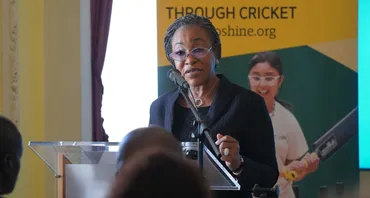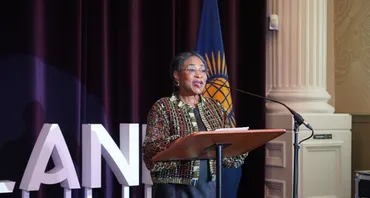



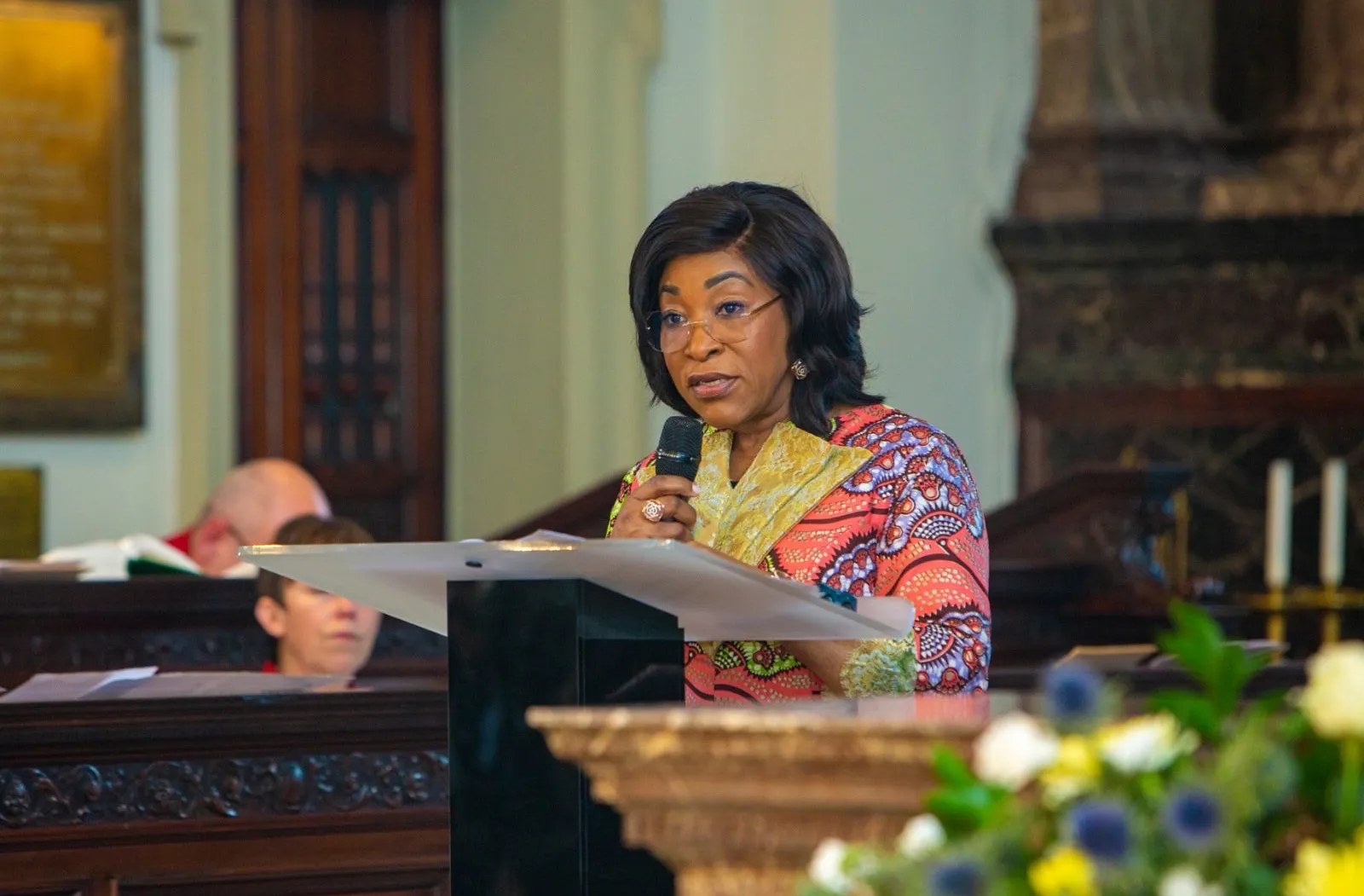
Remarks by Commonwealth Secretary-General, Hon. Shirley Botchwey at the 32nd Commemoration of the 1994 Genocide Against the Tutsi: 32nd Kwibuka (Remember - Unite - Renew) on 7th March 2026 at St Marylebone Parish Church, London.
We gather today in solemn remembrance for the 32nd Commemoration of the 1994 Genocide against the Tutsi in Rwanda. This is a moment not only to honour the memory of over one million innocent lives lost, but also to confront a painful truth: the world failed Rwanda. The promise of “never again,” born from the ashes of past atrocities, was not upheld. We must acknowledge this failure with humility and resolve, for remembrance without honesty cannot lead to prevention.
Today, we bow our heads to the victims—men, women, and children whose lives were taken in unimaginable brutality. We stand with the survivors, whose resilience continues to inspire the world. And we reaffirm that memory is a responsibility. To remember is to resist indifference. To remember is to defend truth against denial and distortion.
Yet, even in the shadow of such profound tragedy, Rwanda offers the world a powerful testament to human resilience and renewal. In the decades since 1994, Rwanda has chosen a path not of vengeance, but of unity. Through courage, leadership, and a commitment to justice and reconciliation, the nation has rebuilt its social fabric and restored hope among its people. My connection with Rwanda started far back, when I served in different capacities back home. That connection has been shaped by lessons from Rwanda’s story of resilience and recovery. Using several approaches, including home-grown solutions, Rwanda has created a model that should be emulated by other post conflict nations.
Community-based justice mechanisms, national reconciliation efforts, and inclusive governance have helped foster trust where there was once deep division. Rwanda’s journey reminds us that even the deepest wounds can begin to heal when dignity, accountability, and shared purpose guide a nation forward. It is a story not of forgetting the past, but of transforming it into a foundation for peace.
Rwanda’s contributions to the Commonwealth reflect this same spirit of renewal and leadership. From successfully hosting the Commonwealth Heads of Government Meeting in 2022, to its active role in the Troika, and its consistent engagement in different Commonwealth meetings, Rwanda has demonstrated a strong commitment to the values that bind us together as enshrined in our charter. Its voice within our association is both constructive and forward-looking, shaped by history yet focused firmly on the future.
As we reflect today, we must also look ahead. The responsibility to prevent such atrocities does not rest with one nation alone—it belongs to all of us. Leaders across the Commonwealth and beyond must remain vigilant against the forces that enable violence- hate speech, division, discrimination, and the erosion of truth.
We must be clear: denial of genocide is not merely an affront to memory—it is a threat to peace. When truth is distorted, when history is rewritten, and when human dignity is diminished, the conditions for violence can take root once again. It is our duty to challenge these dangers wherever they appear.
To the young people of the Commonwealth, I say this: your role today will define our future. Your voices matter. Your actions matter. Stand against hatred in all its forms—online and offline. Defend truth. Promote understanding. Build bridges where others seek to divide. The future we aspire to depends on your courage to uphold the values we share.
Let this commemoration not only be a moment of mourning, but a call to action. Let us recommit ourselves to building societies where diversity is celebrated, where justice prevails, and where every individual is treated with dignity and respect. In honouring the memory of those we lost, and in standing with those who survived, we renew our collective pledge: never again must mean never again.