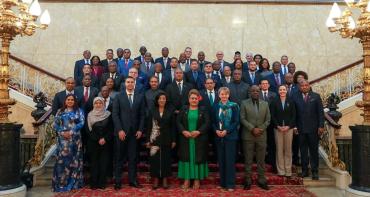



More than 35 judges and magistrates from across South Africa have completed two Commonwealth train-the-trainer workshops, designed to strengthen how courts handle cybercrime cases.
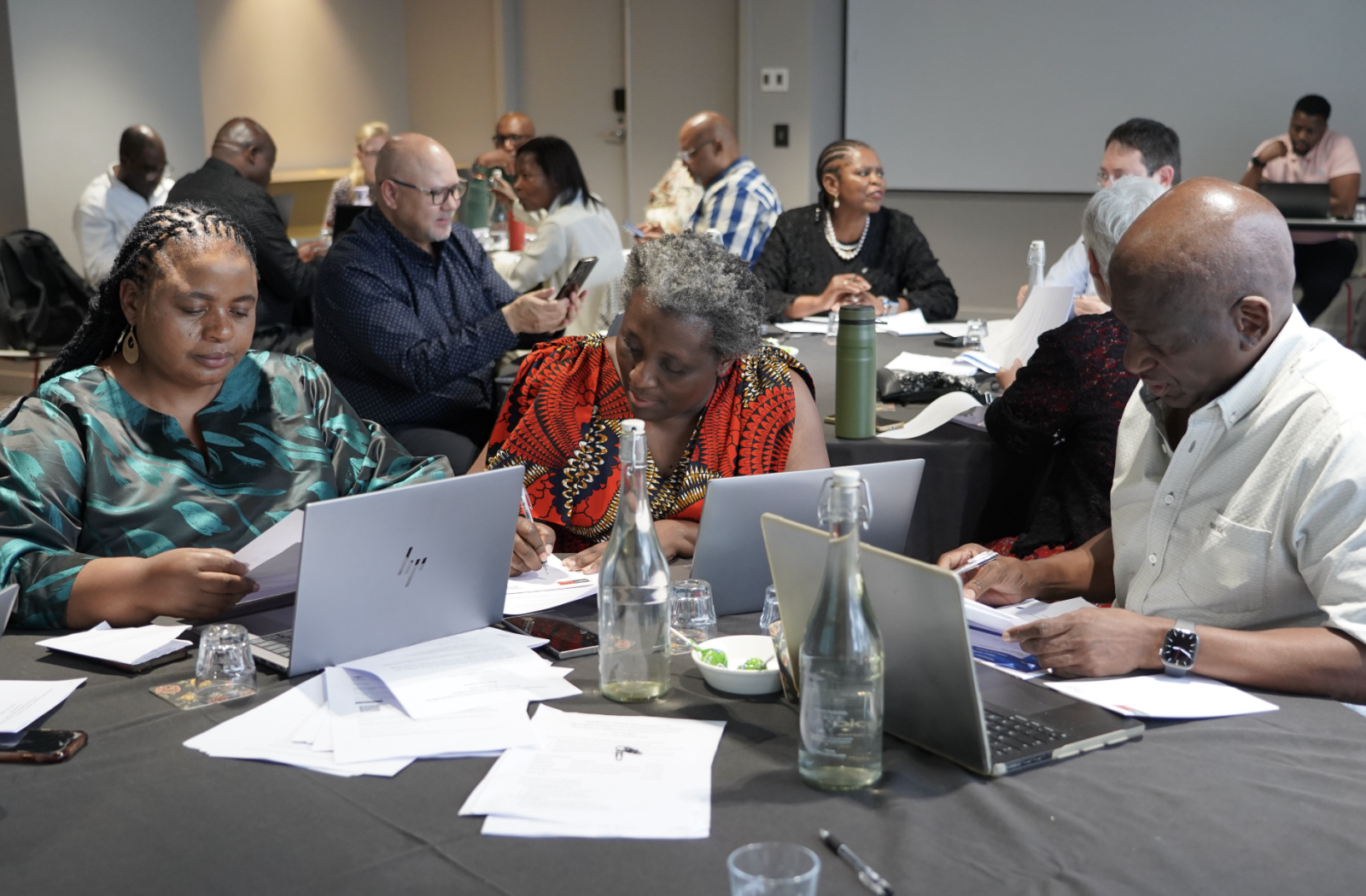
Participants will now go on to train their peers in the justice system, sharing practical knowledge and consistent approaches. This will help improve how courts deal with crimes committed online, as well as cases involving electronic evidence that affect people and businesses every day.
Supported by the UK’s Foreign, Commonwealth and Development Office, the two workshops were held in Johannesburg from 1-5 December 2025 and 12-15 January 2026, in partnership with the South African Judicial Education Institute.
Using group exercises and mock cases, judges and magistrates worked through the key steps courts deal with every day. This included how electronic evidence is collected and admitted, how legal safeguards are applied, and how fair and proportionate decisions are made to hold offenders to account.
Participants also led mini-training sessions on key issues, including standard procedures for issuing search warrants, handling electronic evidence and applying mutual legal assistance in court proceedings.
Protecting the vulnerable
One participant, Judge Nolonwabo Balele from the Free State province, said the training clarified how to handle digital evidence in court.
She said: “The main thing I learned is how digital evidence should be admitted, what to look for, and how to balance that evidence while protecting the rights of the accused.”
Judge Balele also highlighted the responsibility judges have in protecting vulnerable victims, particularly women and girls.
She added:
“Judges are the buffer between society and those who target the vulnerable. The lives of vulnerable people are in the hands of judges once cases come before the court.”
Judge Balele said the impact of the training would extend beyond the workshops, adding that participants would pass on the knowledge to judges across the country to bolster the response to cybercrime.
Acting Judge President Andre Petersen from South Africa’s North West province described cybercrime as a serious challenge, saying it has “worrying impacts” on businesses, public institutions and citizens, with annual costs exceeding ZAR 2.2 billion.
He added:
“Judges are trained in the law, but most judges are not tech-savvy. This workshop helps judges learn the intricacies of digital crimes and identify our shortcomings.
“We need a judiciary that can keep pace with the digital age and is not stuck in the age before technology, and that is why this initiative is so important.”
Staying ahead
Judge Petersen expressed hope that continued judicial training would help courts stay ahead of criminals and reduce the impact of cybercrime in South Africa.
In his remarks, British High Commissioner to South Africa, Antony Phillipson highlighted the urgency of the challenge, citing a 2024 survey which found that 47 per cent of organisations in South Africa experienced at least one cyber-attack.
He said:
“The whole breadth of our law enforcement landscape needs to be equipped to deal with this issue.
“Judges are critical stakeholders in the cyber law enforcement pipeline. Having them all present is an important opportunity to help build resilience against our shared cyber threats.”
Commonwealth Assistant Secretary-General, Professor Luis G. Franceschi said:
“Our vision is a self-sustaining national capacity where judges in South Africa can confidently investigate, assess, and adjudicate cyber-related matters.”
He encouraged participants to share what they have learned with colleagues to strengthen how courts handle cybercrime cases, adding: “We cannot guarantee success, but we guarantee failure by giving up.”
Since 2018, the Secretariat’s Cyber Unit has trained more than 2,000 law enforcement officers, prosecutors and judicial officials from 55 of the 56 Commonwealth member countries.