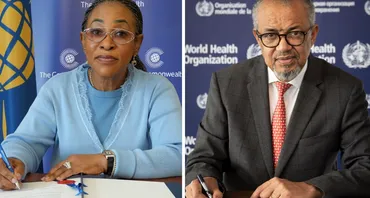



The Commonwealth Secretariat today launched the first edition of a Compendium of Country Case Studies on Cervical Cancer Elimination at the 2026 Inaugural Commonwealth Health Coordination Forum in Geneva.
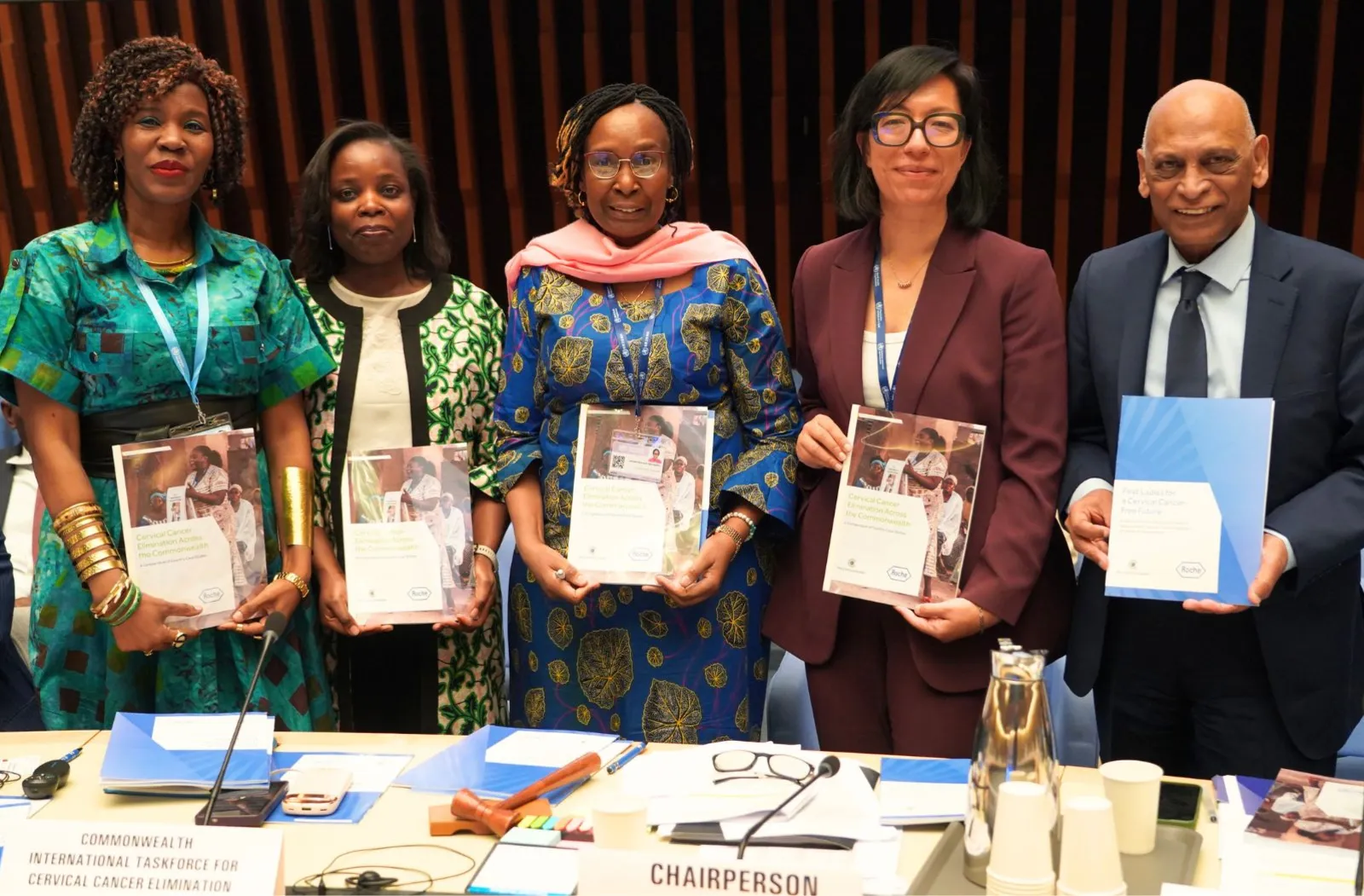
Developed with member governments and in partnership with Roche Diagnostics, the compendium was presented to health ministers, global health leaders, and development partners gathered at the forum to discuss solutions to one of the leading causes of cancer deaths among women in the Commonwealth.
The compendium features case studies from 12 Commonwealth countries, outlining how they are advancing efforts to eliminate cervical cancer through vaccination, screening, treatment and care at a time of tightening financial conditions and evolving health disparities.
Key country examples of impactful interventions include:
- Antigua and Barbuda demonstrates how HPV-based screening, digital systems, and phased implementation can improve coverage and programme coordination in small island settings.
- Australia implemented a comprehensive cervical cancer prevention programme—including HPV vaccination, an organised screening system, a national registry, and self-collection approaches—and is progressing towards the elimination of cervical cancer as a public health problem.
- Bangladesh implemented a large-scale national single-dose HPV (the cause of most cervical cancers) vaccination campaign reaching millions of girls in 2023–2024, supported by a digital tracking system to strengthen follow-up and programme performance.
- Belize expanded access to cervical cancer services through financing and partnership models that support service delivery. It is a small system example of improving sustainability by reducing reliance on external funding.
- Fiji embedded HPV vaccination delivery in schools while using partnerships to strengthen implementation capacity. The report positions Fiji as an example of delivering prevention at scale in the context of a small island developing state.
- Kenya advanced cervical cancer elimination through multi-sector partnerships that support HPV vaccination, screening, and treatment, coordinated nationally through the STOP Cervical Cancer initiatives, with key milestones including the adoption of a National Cancer Control Strategy (2023–2027).
- Nigeria demonstrated high-level political leadership by launching a nationwide single-dose HPV vaccination campaign in October 2023 (led by the First Lady, Her Excellency Oluremi Tinubu) and reporting that approximately 17 million girls had been vaccinated by early 2026.
- Malaysia strengthened screening systems by introducing HPV-based testing supported by digital systems and decentralised delivery through primary care services.
- Zambia offers a practical model for low-resource settings, integrating screening within HIV platforms, using a single-visit screen-and-treat approach to expand access
In a video message, the President of Guyana, His Excellency Dr Mohamed Irfaan Ali, said:
“Guyana applauds the Commonwealth for leading the fight against Non-Communicable Diseases (NCDs), especially the bold, necessary goal to eliminate cervical cancer by 2050. Guyana is also clear that no one country can end this form of cancer alone. This is why Guyana welcomes deeper collaboration across the Commonwealth and beyond.”
Towards a cervical cancer-free Commonwealth
Alongside the compendium, a Cervical Cancer Advocacy Toolkit was presented to support First Ladies, Spouses, and Partners of Heads of Government in raising awareness of the disease in their countries.
In her foreword to the toolkit, the Commonwealth Secretary-General, Hon Shirley Botchwey noted the importance of equipping advocates to speak effectively and act decisively through leadership, collaboration, innovation, and sustained investment. She said:
“First Ladies have a unique capacity to mobilise public attention, influence national dialogue, and inspire action on issues of profound social importance. This toolkit has been developed to support First Ladies, Spouses and partners of Heads of Government in leading informed, strategic, and impactful advocacy for cervical cancer elimination across Commonwealth countries.
“By placing women’s health, equity, and dignity at the centre of national priorities, we can accelerate progress towards a future where no woman dies from a preventable disease.”
In his opening remarks, the Chair of the forum, H.E. Leslie Ramsammy, former Guyana Minister of Health and Permanent Representative of Guyana to the United Nations Office in Geneva, said:
“Our purpose today is to identify where Commonwealth co-operation can add practical value. This includes strengthening national cancer control plans, improving early detection and diagnosis, expanding access to treatment and palliative care, and improving data systems for better planning and accountability.”
Held ahead of the 79th World Health Assembly (WHA), the forum was chaired by the Government of Guyana under the theme ‘Shaping the Future of Cancer Across the Commonwealth’.
The Assistant Director-General, Health Promotion, Disease Prevention and Care, World Health Organization Dr Jeremy Farrar, said:
“We need to address cancer initiatives in a continuum, by examining three strategic areas: promotion, prevention and treatment.
The best way of connecting is to make sure that our health systems work for everybody in an equitable and accessible way. We have to reconnect our politics and our policies with communities and health. This health forum could help us push that forward.”
Discussions on cancer prevention, early detection, treatment and care were informed by the findings of the Lancet Oncology Commission on Cancer in the Commonwealth. Commenting on the role of partnerships, Vice President & Lifecycle Leader Oncology Assays, Roche Diagnostics, Dr Rebecca Ewald noted:
“Eliminating cervical cancer requires sustained commitment, strong partnerships, and coordinated action to ensure every woman has access to prevention, early detection, and timely care. At Roche, we are committed to working alongside governments, First Ladies, healthcare professionals, and policymakers to expand access to screening and strengthen comprehensive cervical cancer elimination programs across the Commonwealth.”
The forum session on National Cancer Control plans, co-chaired by the United Kingdom, focused on translating evidence and Commission recommendations into practical country-level implementation, drawing on real-world challenges and lessons from member states.
In the session on financing cancer care, co-chaired by the Director General/CEO National Institute for Cancer Research and Treatment (NICRAT), Nigeria’s Federal Ministry of Health and Social Welfare, Usman Malami Aliyu, participants shared practical approaches to mobilising and using domestic resources, emphasising the need to safeguard essential cancer services within Universal Health Coverage (UHC) as fiscal space tightens and external financing becomes less reliable.
The Forum concludes following a flagship youth mental health 79WHA side event on 20 May, co-hosted by the Commonwealth Secretariat and the World Federation of the Sporting Goods Industry.
Recommendations emerging from the Forum will be conveyed to future meetings of Commonwealth Ministers of Health. Under the Commonwealth’s new Strategic Plan 2025–2030, the Commonwealth Health Ministers Meeting will be convened once every four years. The Commonwealth Health Coordination Forum, convened by the Commonwealth Secretariat, represents a streamlined ministerial-level forum during intervening years.