

Speech by Commonwealth Secretary-General, Hon. Shirley Botchwey at the CHOGM: Business Forum Opening on Monday 2 November 2026 at the The Sticky Wicket, St John’s, Antigua and Barbuda
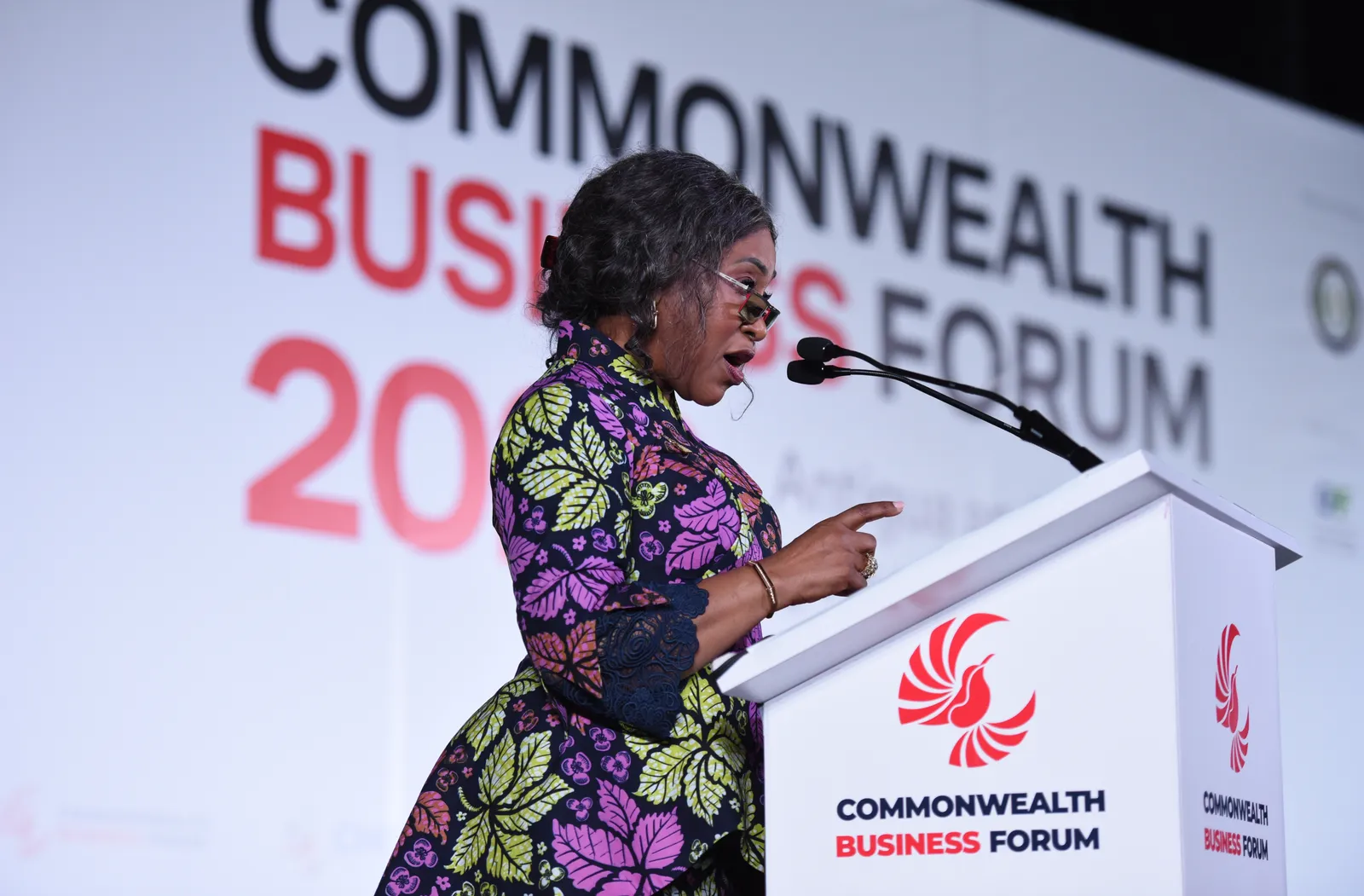
It is my pleasure to join CWEIC and our business partners at my first CHOGM as Secretary-General.
I have attended all summits organised by CWEIC since I assumed office because what they do, and what you do as investors and enterprises, is vital for my agenda for resilience building and shared prosperity everywhere in the Commonwealth. It is fair to say that no country is doing well globally. The unsustainable global arrangements that did not work for the developing countries, no longer work for our industrialised countries. The current disruptions to that system have compounded the challenges to our economies, with shifts to supply chains and increased prospects for financial and energy crises.
I want to put on record my thanks to the Government of Antigua and Barbuda and to the Commonwealth Enterprise and Investment Council. This week, St John’s is the capital of our Commonwealth, and it is a fitting place to consider the crucial question of Commonwealth trade. Because this agenda is vital to our small island developing states.
I want to share with you two numbers. The first makes me proud.
US$874 billion, the value of trade in goods and services between Commonwealth countries in 2024. That is 6.5 per cent up year on year and US$223 billion higher than before the COVID pandemic.
Since 2020, trade among our members has grown faster than our exports to the rest of the world, in goods and in services alike. So, the Commonwealth advantage is real.
But now for the second number. Eighty-nine per cent: the share of intra-Commonwealth merchandise trade generated by just ten of our member countries. That leaves the other 46 members sharing about one dollar in every ten. It’s the same story in services and investment. Three countries account for 62 per cent of services trade between us.
Our developing small states received just 1.5 per cent of investment flowing between Commonwealth countries. We can do better, to the benefit of all.
When a small state economy grows, it creates a bigger market for everyone else. Together, we can be one of the world’s great trading partnerships. And our smaller members have so much to offer that partnership. They are world leaders in tourism, in the blue economy, in renewable energy.
Our countries are also a storehouse for critical minerals. Our Leaders have set us an ambitious target of reaching US$2 trillion in intra-Commonwealth trade by 2030. We can only reach that goal by seating our small and developing states at the table as exporters, not just markets.
So, what is holding them back?
In part, it is the rules on how risk is priced. Too many of our members are judged based on historical assumptions and not objective analysis. That makes capital more expensive for the countries that need it most.
The Secretariat is working in partnership with the Association of Commonwealth Universities and our trade and investment networks, to develop modern risk assessments based on objective criteria. Because a country should be judged fairly on its prospects.
Another challenge is that the everyday costs of trading fall hardest on the smallest businesses. The Commonwealth Secretariat is building practical tools to help.
This week, we launch our Commonwealth Trade Portal, to help businesses find new markets, and our Commonwealth Green Finance Platform, to help firms in the green and blue economies access capital. Our Trade Finance Facility is helping small and vulnerable states reach the finance and markets that larger economies take for granted. Our Model Law on Digital Trade is helping governments move to paperless commerce, cutting the cost of distance for our more remote member states.
Tools can help. But they will only take us so far.
We also need a shift in mindset, and that is down to all of you and our leaders. This is a CHOGM of high ambition. As we seek to navigate the tumult and shifts in global markets, Commonwealth businesses should see an equal stake in how we turn our 2.7 billion population into a market that powers their growth and profits as well as the wealth of our nations.
The old division of labour between the state and business cannot drive that transformation. The current model of corporate social responsibility, no matter how virtuous, is inadequate for the social investments needed for a thriving market. I therefore call on you, as a first step, to make contributions to the two initiatives that will be launched at this CHOGM to train over 10 million youth in digital skills and entrepreneurship and to establish a 700 million United States dollars renewable energy credit fund to increase national climate action ambitions and promote Commonwealth industry.
To the business leaders in this room, thank you for engaging with this agenda for transformation. When you look for your next supplier, your next market or your next investment, I urge you to look past the usual destinations and consider our smaller states.
At the Leaders’ Investment Summit, 28 developing countries will investment ready projects, worth a combined US$ 52 billion, in front of investors. That will be a good place to start. It gives an indication of the demand appetite. The Commonwealth Secretariat is working with our member countries to improve submissions, which were not deemed technically ready, and those would be posted on our new platform for investment opportunities.
Today, a young person with a smartphone is holding a potential business in the palm of their hand. Right now, somewhere in the Commonwealth, someone has a product the world would love, but no one to back them. There are businesses that could fill a market need in another nation, if only they could reach them.
That is the untapped potential of Commonwealth trade.
Let us find it together.
A new era of Commonwealth trade will be measured by how many of our members share in it.
Let us make sure that the number is all 56.