

Pre-CHOGM lecture by the Commonwealth Secretary-General, Hon Shirley Botchwey at Wolfson College, Oxford University, on 19th October 2026.
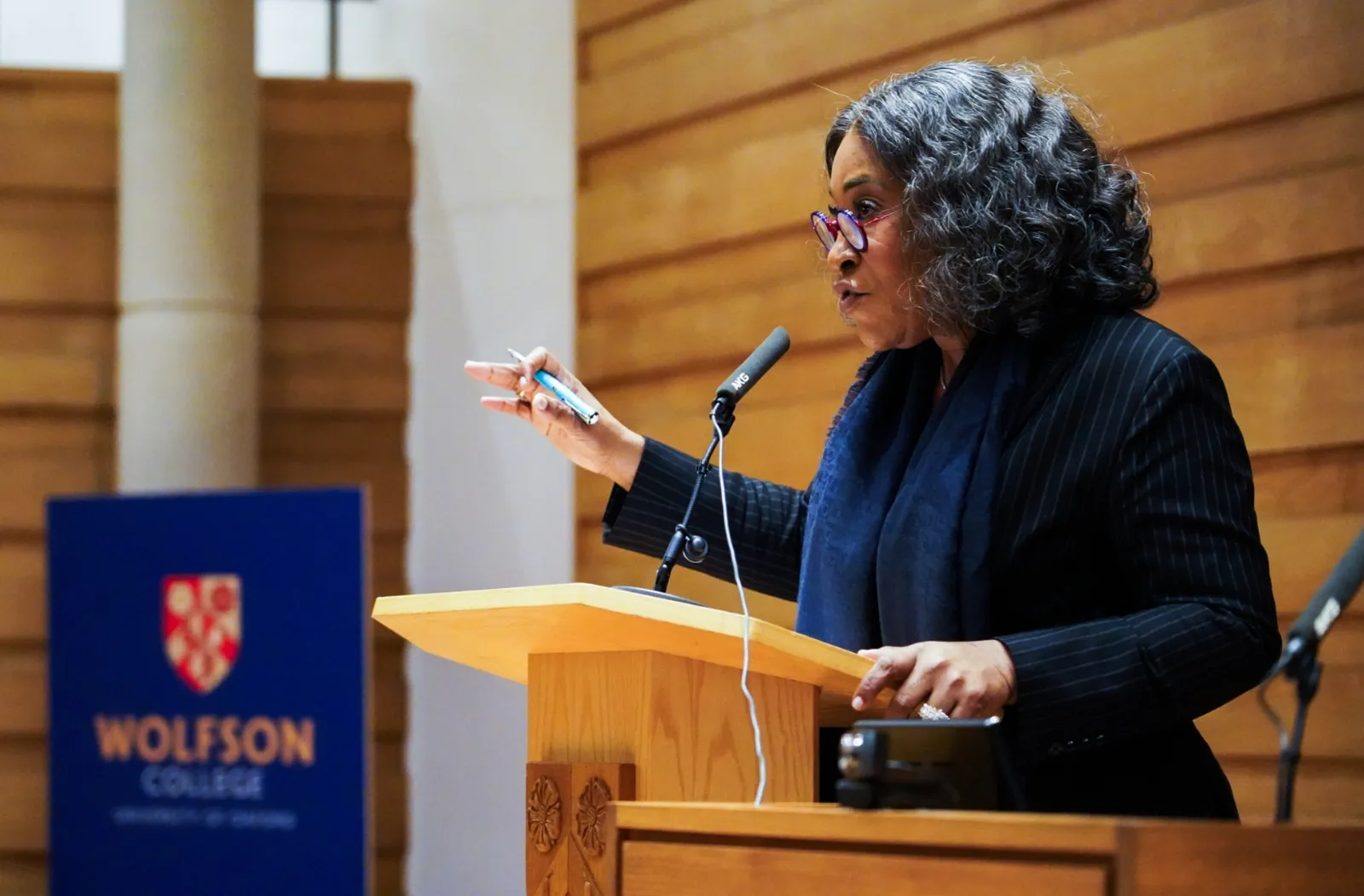
When I stood to be Secretary-General of the Commonwealth of Nations, I said it should aim to be the second-most consequential international organisation after the United Nations.
Eighteen months into my term, I stand by that ambition. Indeed, my conviction has only deepened that this is a moment of historic opportunity.
There is a gap in the multilateral system, between universal institutions too often hamstrung by great power rivalries and regional blocs that lack global reach.
Our organisation is tailor-made to fill that gap. Our network is built on shared values and time-tested relationships. It is positioned to have impact but has the potential to do much more.
If we are willing to move beyond the confines of an international system that no longer responds to the expectations of people around the world, if we see this period of global fracture as a warning against settling for familiar ways of thinking about the world and our ability to reshape it, then we can help our members become more resilient and their people more prosperous in the years ahead.
Seizing that opportunity will require us to take risks and work differently.
If we bring the full strength of the Commonwealth to bear, we can show the world that international co-operation does not have to be a zero-sum game.
Defining the moment
Only time will tell whether we are living through a period of temporary global turbulence or whether, as seems most likely, we have entered a new era of fracture.
What’s clear is that business as usual in international affairs will no longer cut it. We need bold and urgent change. The rules-based international system established after the Second World War has helped restrain conflict, expand trade and establish standards of conduct.
Its successes were real. But we must also accept that it had significant in-built weaknesses. For all its achievements, the post-war system did not deliver resilience or prosperity equally or fairly. It was conceived in the smaller world that existed before decolonisation.
In 1945, there were fewer than 80 sovereign nations, concentrated in Europe and the Americas. Today, that number has more than doubled, and over half are in Africa and Asia. As participation in the rules-based system grew, the distribution of power and influence within that system did not. Many newly independent countries entered global markets from a position of weakness.
As Foreign Minister of Ghana, I saw that clearly. More recently, the system has begun to lose support even within the developed economies that built it.
Low growth, energy shocks, the return of inflation, weakening social protection and the pressures of migration are daily realities. And for young people, social mobility is no longer guaranteed. Tariffs, subsidies and controls on technology are used to project power. The institutions intended to manage these tensions are losing authority and capacity just as they are needed most.
Development budgets are falling at a time when smarter investments are needed in global public goods to stimulate growth, as more governments divert resources towards defence. Political support for collective climate action is contested and countries that contributed least to global warming bear the brunt. For too many developing countries, the international financial system is working in reverse.
Between 2022 and 2024, they paid US$741 billion more in principal and interest on their external debt than they received in new financing – the largest resource outflow in at least 50 years.
As a former elected official, I know the consequences are political as well as economic. Citizens lose confidence when governments seem unable to offer security or opportunity. Governments that face discontent can turn inward. Some fiddle with democratic institutions to tighten their grip on power.
As international co-operation weakens, it becomes harder to address the pressures that caused discontent in the first place. The Commonwealth can, and I believe must, respond to this challenge of our times.
Why the Commonwealth
The traditional case for the Commonwealth is well known. We are a family of nations, bound together by ties of history and motivated by solidarity.
That’s true. But we are much more than that. We are a global network of 56 equal and independent nations and 2.7 billion people, 60% of them under the age of 30. Our members are drawn from every inhabited continent. They cross geopolitical blocs, uniting some of the world’s largest economies and 33 of its smallest states. They are not bound by a common foreign policy. Yet they have chosen to join and remain part of an association based on partnership, with an exceptional record of reaching consensus on the most intractable issues.
We share a working language. Our legal systems, parliaments, public administrations, schools, universities, and markets share many similarities.
Officials, lawyers, teachers and entrepreneurs understand one another’s institutions. That familiarity creates an automatic comfort zone in markets that require stability and predictability. Trade between Commonwealth countries is less costly than trade between otherwise comparable nations. It is easier to draft a contract. Quicker to form a partnership. Knowledge spreads more rapidly. People draw confidence from knowing that our association is underpinned by the values enshrined in the Commonwealth Charter.
Members have made commitments to democracy, human rights, the rule of law and respect for diversity, the values that underpin strong societies and successful economies.
Those shared commitments set standards which members work together to uphold. The trust they create makes practical cooperation easier.
Commonwealth as a family
The work between our governments is vital. But the Commonwealth lives through the connections between its people.
Over a hundred independent organisations connect our governments with parliaments, universities, professions, businesses and communities across our member states.
Each has its own leadership and purpose. They form the warp and weft of a living Commonwealth of people. Judges draw on decisions from other Commonwealth courts. Universities exchange students and research. Professional bodies share standards and expertise. Parliamentarians, doctors, teachers and campaigners sustain relationships built up over generations. And we should be upfront about our history.
Shared history to a common future
The Commonwealth emerged from empire.
We should neither deny that fact nor minimise its injustices. But the modern Commonwealth was created by independent nations. Former colonies took an imperial relationship and remade it as a voluntary association of sovereign equals. And countries with no British colonial history have since chosen to join.
Some people see our discussions on issues like reparatory justice as evidence that the Commonwealth is trapped in its past.
I draw a different conclusion. A real relationship between the nations which make up the Commonwealth today must be capable of facing up to our shared history honestly. The fact that we can have those conversations while continuing to work together on common objectives for the future is a sign of our strength.
I am a proud daughter of Africa. I did not seek this office to preside over a relic of the imperial past. I did so because I believe passionately in the Commonwealth’s potential to benefit its members and their people today and in the future. And that full potential is still untapped.
Fulfilling our potential
Our members want the Commonwealth’s strengths to be deployed to transform our national destinies. Achieving that is my mission as Secretary-General. Last year, members endorsed a new Strategic Plan to guide that work. It brings our ambitions together around three connected priorities: democratic, economic and environmental resilience. The needs of small and vulnerable states run through all three priorities, as does the role of women and young people in the interconnections between democracy, economics and climate. It is a strategy founded on the belief that the limitations of the post-Second World War global arrangements for finance, trade and governance, and the lessons learnt from over 80 years of development co-operation, demand a change of course.
Our new approach provides a template for delivering results. We want to expand intra-Commonwealth trade and high-impact investments, power Commonwealth enterprise in a consumer market of 2.7 billion people, teach millions of our youth digital skills and entrepreneurship through distance education and unlock private sector and philanthropic funds for an ambitious climate agenda.
At the heart of it all is energising and sustaining our democracies by restoring citizen confidence in governance because it works for them, both economically and through social protection in a Commonwealth of the people.
Our 2.7 billion people represent enormous economic potential. But millions still lack the purchasing power to participate fully in the Commonwealth economy. Our ambition is to turn that demographic scale into more widely shared prosperity.
Strategic partnerships
This requires a reformed and accountable Secretariat, and we are hard at it, ensuring that in-house expertise matches the vision and innovation needed for big, bold results.
But our vision is too big and too bold for any one organisation or multilateral institution to implement alone.
The lesson of our times is that changing course requires strategic partnerships in which everyone has a role to play. Governments and multilateral institutions alone are not the solution - we all are. This new approach has already begun to change how we work.
We worked with partners across and beyond the Commonwealth, including civil society, business and multilateral organisations to develop the Theory of Change underpinning our new approach. Our democratic resilience programmes reflect the connection between satisfying the aspirations of people and sustaining their support for democracy. Our economic resilience agenda is connecting member states to new sources of capital.
We saw that at the Commonwealth Capital Connector in June, when we teamed up with Reuters to bring developing member states and global investors around the table.
Our environmental resilience work is breaking new ground in accessing additional sources of climate funding. And we are working with the United Nations and space-based science companies, including satellite-owning companies, to improve climate forecasting, carbon trading, marine resource identification and distance education, among other applications.
A new model for CHOGM
We have made a strong start. Yet the gap between what we are achieving as a world and where we need to be is vast. To close it, we must unlock private resources in ways the world has never tried before. So, at the Commonwealth Heads of Government Meeting in a few weeks’ time, we will take our work to the next level.
Together with the host Government of Antigua and Barbuda, and with the blessing of Commonwealth leaders, we have reimagined how the summit will work. It will be more streamlined, less discursive, more interactive and action-oriented.
Trade and investment
At the Leaders’ Investment Summit, heads of government will sit down directly with investors and financial institutions. We are assembling a portfolio of investable projects with the potential to deliver lasting economic benefits. Member states have already submitted more than 150 potential investment projects, worth a combined US$50 billion. Leaders and strategic partners, including international financial institutions, will hold a separate discussion on financing for development.
A Commonwealth Free Trade Area may not yet be on the agenda, but we can move in that direction. There is low-hanging fruit to be gathered by making it easier to invest and do business across our countries. The Commonwealth Trade Advantage gives us a head start, but the latest figures show how much room there is to grow.
Ten countries account for almost nine-tenths of intra-Commonwealth trade. Investment is still more concentrated. Between 2022 and 2024, just five countries received 84% of intra-Commonwealth FDI, while developing small states received only 1.5% of those flows. So, as a follow-up to CHOGM, next year’s Commonwealth Trade Ministers Meeting will bring together trade and finance ministers, investment authorities and CEOs to reduce barriers strengthen trade flows and mobilise high impact investments.
Empowering young people
Sixty per cent of Commonwealth citizens are under the age of thirty. Whenever I travel around the Commonwealth, I make a point of talking to young people. I am always inspired by their ambition and potential. Yet time and again, I hear about the challenges they face in finding work and opportunity.
Today, it is harder than ever. The Commonwealth can be part of the solution. Technology now gives us the means to extend education and digital skills on a scale that was previously impossible. And technology creates opportunities for entrepreneurship which our young people are well placed to seize. So, a new Commonwealth Aspiration Endowment Fund is raising $300 million to connect 10 million young people to digital training and entrepreneurship.
Climate and nature
And we should be just as ambitious on climate, promoting smarter approaches that create new industries, power Commonwealth businesses, raise our net zero ambitions and build resilience across the Commonwealth. The loss of natural habitats and the threat of climate shocks rob communities of income and put them at risk of floods and rising seas.
So, we are proposing a new Commonwealth Nature Initiative with funding to restore habitats. We want to help those most vulnerable to climate shocks, like the fishers who can lose their boats, and with them their livelihoods, in a single hurricane. So, we hope to work with insurers on an initiative to develop a Commonwealth-backed mutual insurance mechanism to provide rapid payouts after disasters. Each year, developing countries receive tens of billions of dollars in finance to help them adapt to climate change.
The Commonwealth Secretariat has already helped our countries access US$645 million of public funding to support their climate financing needs. But that is not enough. Our countries’ annual needs run into the hundreds of billions. To meet those needs, we need to unlock the huge resources of the private sector. So, we are working with high-net-worth individuals to set up a $700 million Commonwealth Net Zero Fund to provide access to credit for a renewable-energy revolution. These are ambitions to match the scale of the challenges we face. Together, they represent the new model of Commonwealth action I want to build.
I believe this CHOGM can be a turning point in how we deliver for our 2.7 billion citizens.
Changing the rules
And we are only at the start of the Commonwealth’s transformation. We should be ambitious about where that journey can take us.
Commonwealth membership should boost a country’s resilience in the face of global threats and enlarge the opportunities available to its citizens. And where our members’ interests converge, we should be more confident in helping to shape global rules on issues like climate finance and debt.
We are already working with the Association of Commonwealth Universities and trade and investment networks to propose alternative investment risk assessments that are based on objective criteria, rather than old notions of risk rooted in historic fears. It is time to change the rules that determine whether vulnerable countries can access affordable finance. Income per capita alone does not capture a nation’s vulnerability to external shocks. That is why the Commonwealth helped to develop the United Nations Multidimensional Vulnerability Index.
Now we are calling for vulnerability to complement income in decisions on finance and debt treatment. We are already helping members through our Debt Management Programme.
We are now seeking deeper collaboration with partners like the United Nations Development Programme, the OECD, regional development banks and civil society to move multidimensional vulnerability from theory into practice.
This will not be the work of a day. It is a big, ambitious agenda, and I am determined that we will see it through.
This is our moment
The Commonwealth has always possessed a remarkable capacity for reinvention. Our generation must now put its relationships to work, helping our countries become more resilient and our people more prosperous. That is the ambition we will take to CHOGM and beyond.
If we succeed, people will feel the difference in their lives. And we will show a fragmenting world how international co-operation can deliver when it is based on collective interest, not just national interest.
I truly believe it is the Commonwealth’s moment.
We intend to seize it.