Since joining the Commonwealth in 1981, Antigua and Barbuda has contributed to Commonwealth priorities and cooperation. Its leaders supported stronger action to defend democratic values. Its institutions convened Caribbean cooperation on governance and human rights, while its young people and women advanced enterprise and inclusion.
Ocean stewardship and access to climate finance remain central to the country’s international engagement. These partnerships reflect national priorities and offer lessons for other small island developing states.
As host of the 2026 Commonwealth Heads of Government Meeting, Antigua and Barbuda brings that experience to a wider ambition: turning partnerships and investment into shared prosperity. Its national motto, “Each Endeavouring, All Achieving”, expresses the spirit of this continuing journey.
1976
Training partnerships prior to membership
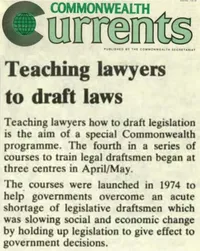
Before formal Commonwealth membership, Antigua and Barbuda participated in professional training and cooperation.
Youth workers joined courses organised by the Caribbean regional centre of the Commonwealth Youth Programme.
Legal professionals took part in training in legislative drafting. During the later 1970s, the Secretariat’s programme expanded to cover economic development law, treaty drafting and parliamentary procedures.
1981
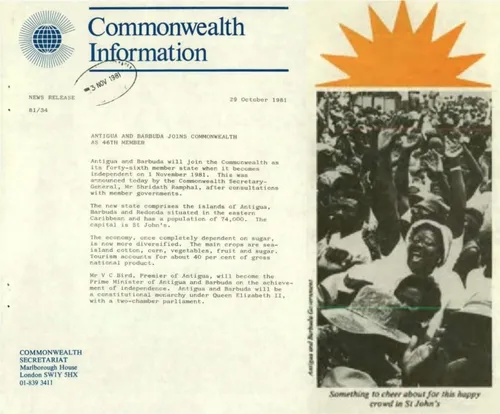
Antigua and Barbuda marks independence
On 1 November 1981, Antigua and Barbuda became independent and joined the Commonwealth as its forty-sixth member.
Sovereignty opened a new chapter in the country’s development and its participation in Commonwealth cooperation.
1983
Antigua and Barbuda attended its first Commonwealth Heads of Government Meeting
At the 1983 meeting in New Delhi, Antigua and Barbuda joined discussions on international security, nuclear proliferation and economic cooperation.
The country supported the Commonwealth’s continuing effort to end apartheid in South Africa.
National priorities and Commonwealth cooperation
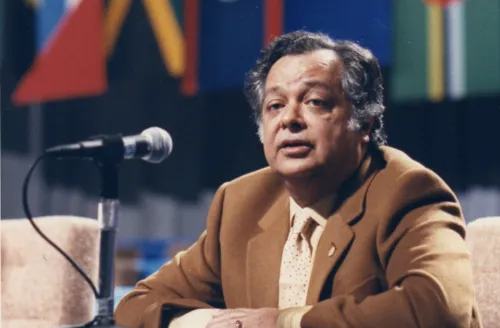
Deputy Prime Minister and Minister of Foreign Affairs Lester Bird highlighted the importance of technical cooperation for essential public services, including water and electricity, and their contribution to the tourism economy.
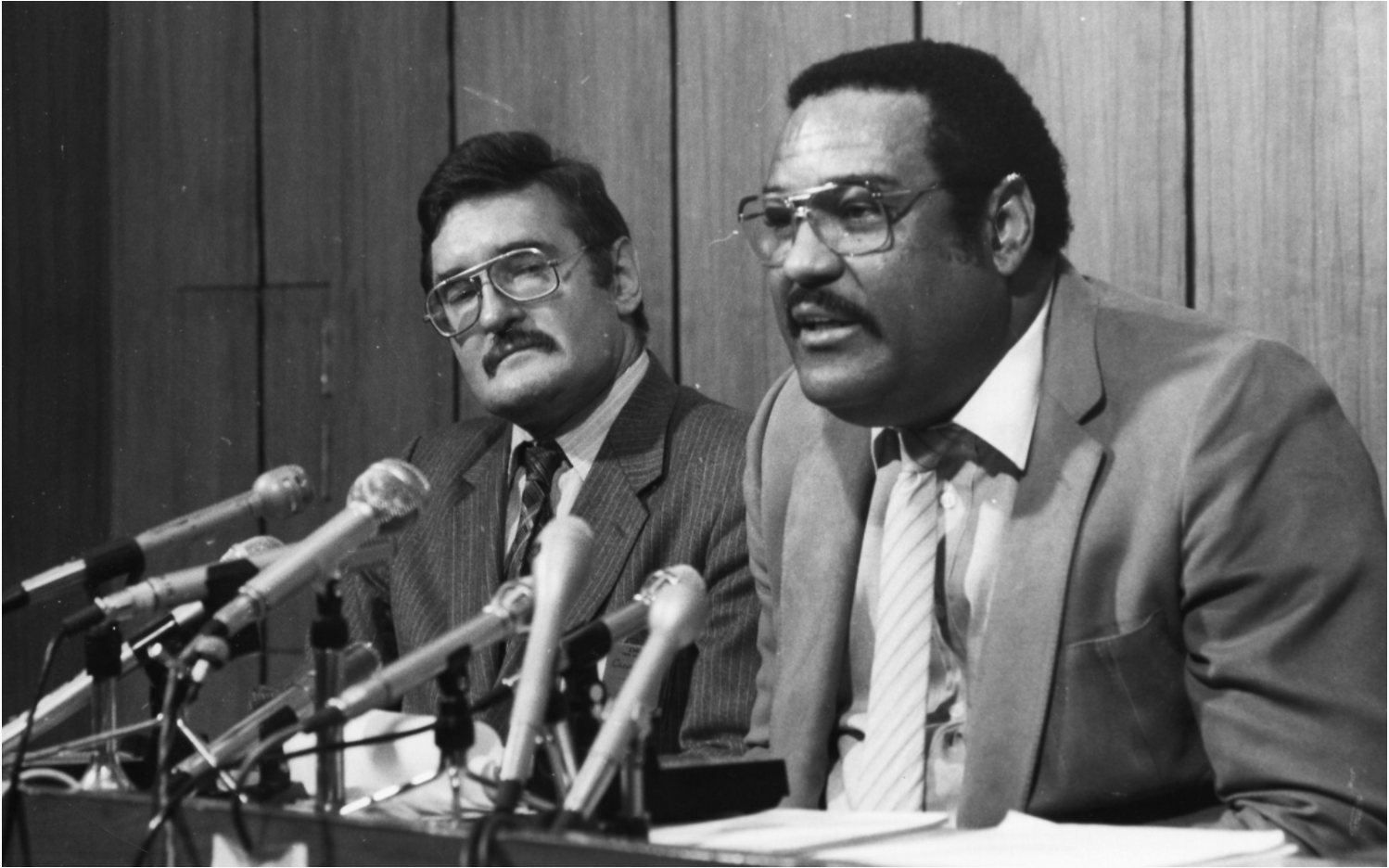
Lester Bird at the Commonwealth Heads of Government Meeting press conference, New Delhi, 28 November 1983.
1984
Advancing Commonwealth cooperation on women’s affairs
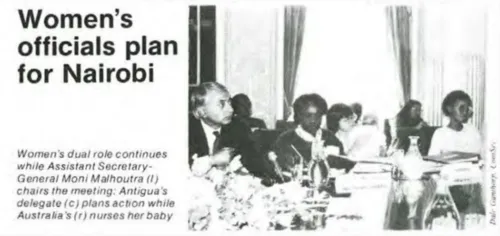
Antigua and Barbuda’s representative joined senior officials in London to prepare priorities for Commonwealth cooperation on women’s affairs and the conclusion of the United Nations Decade for Women.
Discussions addressed women’s economic participation, rural livelihoods, health and employment, alongside violence against women and access to education.
1989
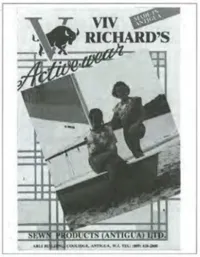
Developing national enterprise and export opportunities
Antigua and Barbuda worked with the Commonwealth Secretariat to develop industrial capacity and identify export markets.
A sportswear project combined market testing, manufacturing technology and business support. The contemporary account reported expanded production and new jobs, with garments marketed under the Viv Richards label.
1990
Advancing Caribbean marine science and sustainable ocean stewardship
Antigua and Barbuda participated in the Caribbean Oceanographic Resources Exploration project, alongside other Caribbean countries, the Commonwealth Science Council and India.
The project gathered information on marine resources and environmental conditions to support research, scientist training and better ocean management.
Under the 1982 United Nations Convention on the Law of the Sea, exclusive economic zones may extend up to 200 nautical miles from the relevant baselines, subject to delimitation with neighbouring states.
Scientific cooperation strengthened Caribbean knowledge of the ocean and the skills needed to manage it sustainably.
1993
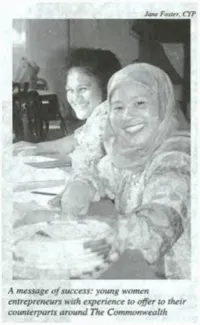
Young women leading enterprise and economic development
Young women entrepreneurs shared the experience of building their own businesses at a Commonwealth Youth Programme workshop in Antigua and Barbuda.
Senator Bernard Percival, Minister of Education, Culture and Youth Affairs, opened the workshop. The women’s accounts informed learning materials, enabling their knowledge to support other young entrepreneurs.
1995
Supporting Commonwealth action in defence of democratic values
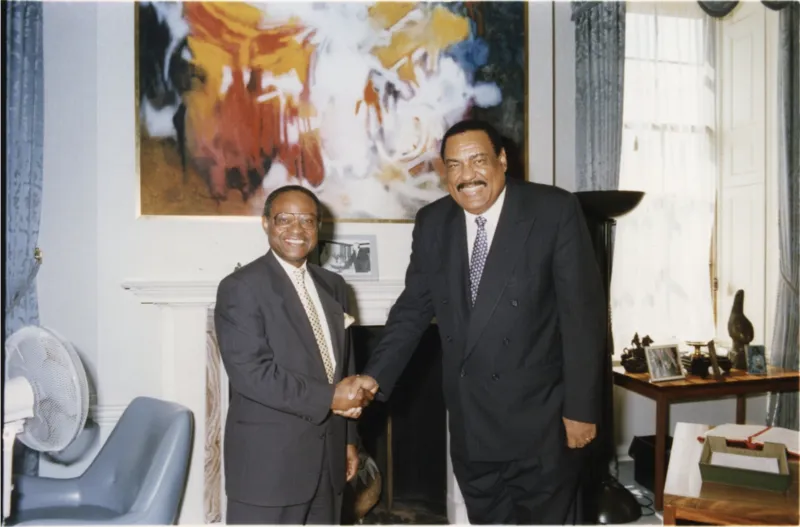
Antigua and Barbuda helped build early political support for the Commonwealth Ministerial Action Group, established in 1995 to address serious or persistent violations of Commonwealth democratic principles.
In his memoir, Chief Emeka Anyaoku identified Prime Minister Lester Bird among the leaders whose early support helped advance the proposal. This contribution places the country within the story of shaping Commonwealth institutions.
1998
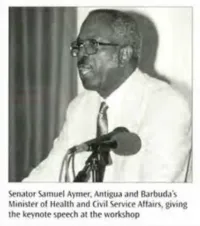
Convening Caribbean cooperation on accountable governance
A regional meeting in Antigua and Barbuda in 1998 resolved to establish the Caribbean Ombudsman Association.
By bringing national institutions together, the country provided a setting for cooperation on public accountability, human rights and democratic governance across the Caribbean.
2005
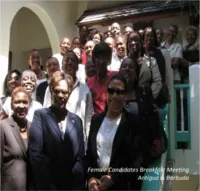
Convening regional action on women’s political participation
Antigua and Barbuda hosted a Caribbean regional workshop on women’s leadership and political participation.
The resulting Antigua and Barbuda Declaration called on Heads of Government and political parties to honour Commonwealth commitments on democracy and gender equality.
2006
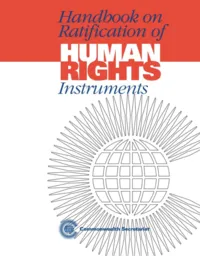
Bringing Caribbean governments together on human rights
At the Government’s invitation, Antigua and Barbuda hosted a regional human rights treaty workshop in St John’s on 25–26 April 2006.
The Attorney General and Minister of Legal Affairs, the Hon Justin L. Simon QC, opened the meeting, co-sponsored by the Inter-American Commission on Human Rights and the Commonwealth Secretariat.
Officials examined treaty ratification and implementation, providing a forum for Caribbean cooperation on international and regional human rights commitments.
2015
Putting young people at the centre of Caribbean development
Antigua and Barbuda hosted the Caribbean Region Commonwealth Youth Ministers Meeting in St John’s on 28–30 April 2015.
The agenda connected youth employment and entrepreneurship with civic participation, peacebuilding and professional youth work, alongside negotiations on the Sustainable Development Goals.
The meeting placed youth participation at the heart of national development.
As regional host, Antigua and Barbuda brought ministers and young people together to discuss how policy could expand opportunities and strengthen young people’s voice.
2017
National leadership for disability inclusion
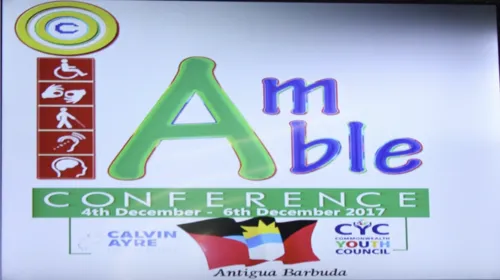
Antigua and Barbuda hosted the Commonwealth Youth Council’s I Am Able conference in December 2017, in partnership with the Government and the country’s High Commission in London.
National Youth Delegates Jonelle Walsh and Kurt Williams helped initiate the campaign. Ambassador Dr Aubrey Webson, then Permanent Representative to the United Nations, advocated equal opportunity and inclusion.
The conference advanced young people’s leadership on disability rights ahead of the 2018 Commonwealth summit.
2018
Strengthening national and regional access to climate finance
Antigua and Barbuda worked with a Commonwealth Climate Finance Access Hub Adviser to strengthen national capacity to access climate finance.
In 2018, its Department of Environment also secured an agreement enabling direct access to Green Climate Fund resources. A related regional project included Dominica and Grenada.
This combination of national institution building and regional cooperation shows Antigua and Barbuda contributing practical approaches for other small island developing states. Its climate diplomacy seeks finance that supports resilience and national development.
Strengthening Caribbean and Americas election management
The Antigua and Barbuda Electoral Commission co-organised the first Caribbean and Americas regional training event under the Commonwealth Election Professionals Initiative in 2018.
Eighteen professionals from nine regional Commonwealth election management bodies exchanged experience on political finance, institutional independence and gender equity.
The Commission’s role illustrates national institutions contributing to credible and inclusive elections across the region.
18 election professionals
9 regional election management bodies
National expertise supporting regional cooperation
2023
Shaping a sustainable blue economy
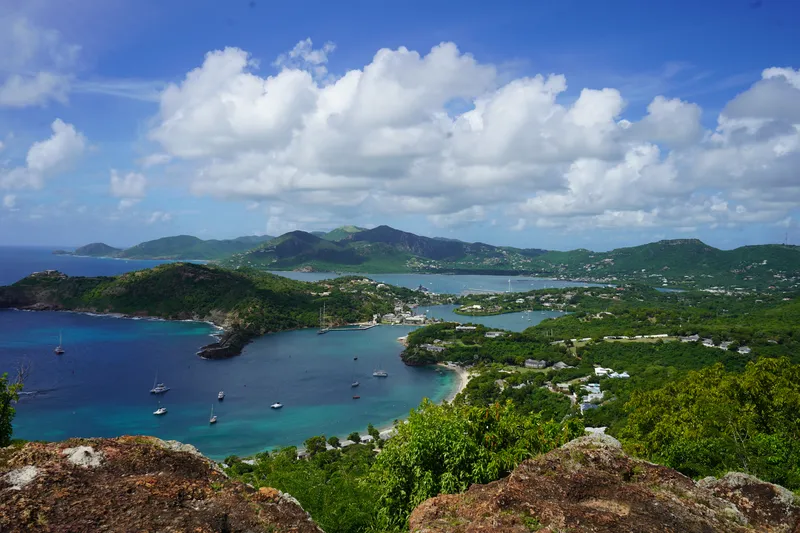
Antigua and Barbuda’s Government and national stakeholders helped pilot a Rapid Readiness Assessment for a sustainable blue economy. Findings were published in March 2023.
The work combined national knowledge with expertise from the Commonwealth Secretariat, the United Nations Environment Programme, Howell Marine Consulting and the University of Portsmouth.
It identified national priorities and tested an approach with wider Commonwealth relevance.
“Antigua and Barbuda must forge its own path” Ann-Louise Hill, Department of Blue Economy, 2023.
National priorities and stakeholder participation guide a transition that connects economic opportunity with ocean health.
2026
Antigua and Barbuda welcomes the Commonwealth with pride and purpose
Antigua and Barbuda will host the Commonwealth Heads of Government Meeting in St John’s from 1–4 November 2026, coinciding with forty-five years of independence.
The Business Forum, People’s Forum, Women’s Forum and Youth Forum will bring wider participation to the summit.
Under the theme Accelerating Partnerships and Investment for a Prosperous Commonwealth, the host country aims to advance investment, climate action and development through international cooperation.