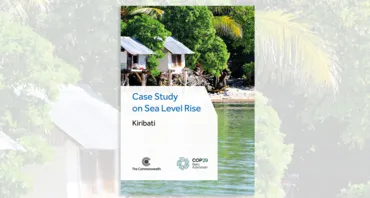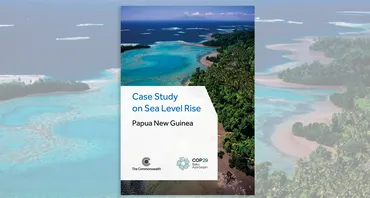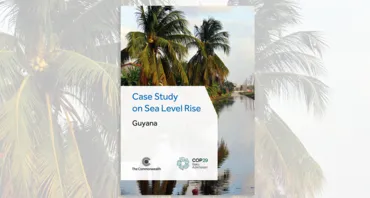



Keynote Address by Commonwealth Secretary-General, Hon. Shirley Botchwey, at the Deutsche Bank ‘Deep Currents’ Conference in partnership with Ocean Risk and Resilience Action Alliance (ORRAA) Blue Horizons; Investing in the Ocean, the Next Frontier during London Climate Action Week on 23 June 2026 at Deutsche Bank London Headquarters.
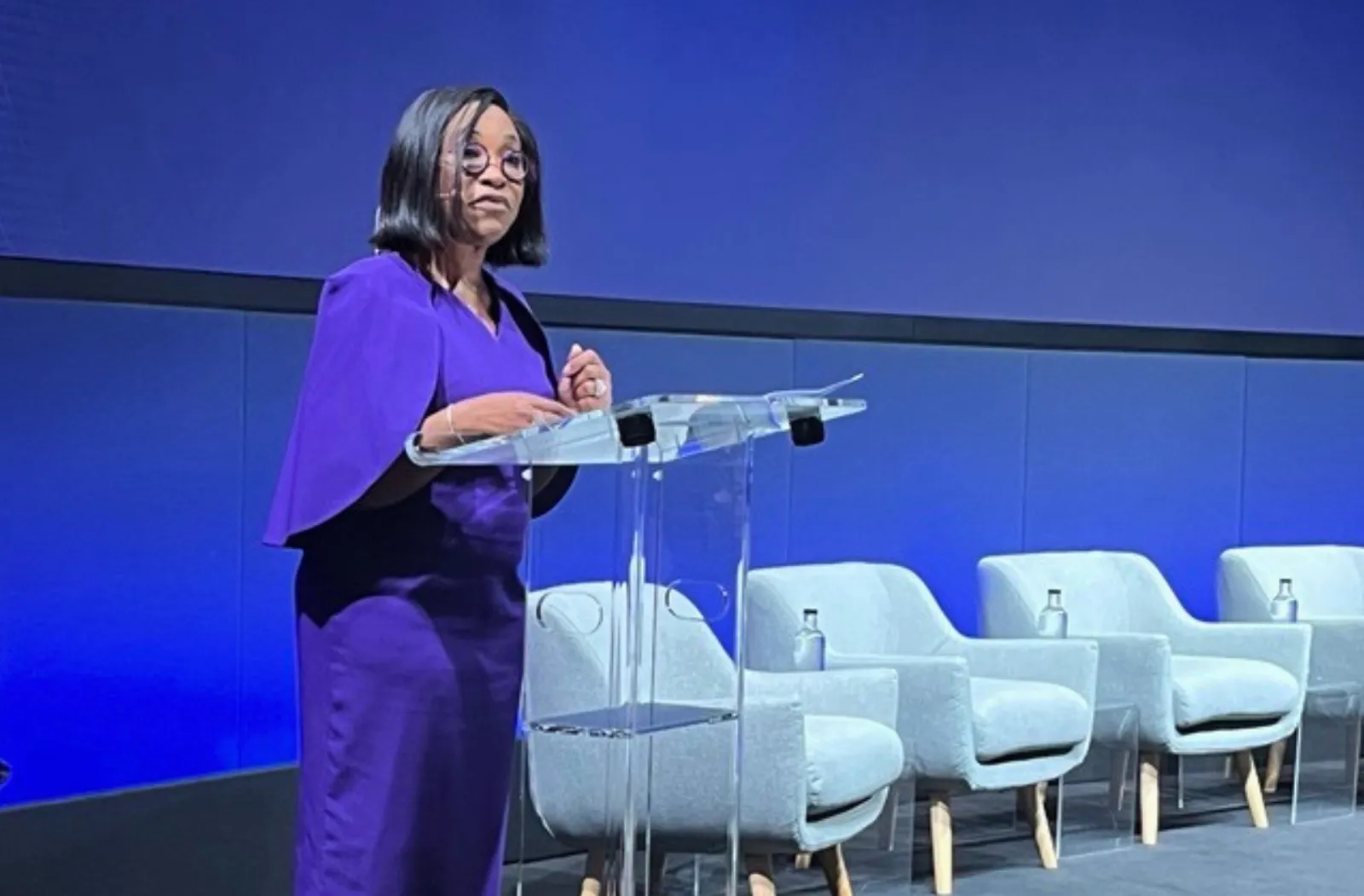
It is a pleasure to be with you, and I thank Deutsche Bank for convening this conference. The theme – Deep Currents – is well chosen.
And what we have heard so far, what we will continue to hear, the talent in this room – taken together they represent all the forces, from science and finance to people and politics, that are critical to the future of our one shared ocean.
I mention people deliberately. We can, and we must, have the technical conversations. But in the end, it all comes down to people.
The fisher repairing nets before dawn. The family watching the sea move closer to the graves of their ancestors. The fisher and the insurer grappling with the challenge of insuring boats that are destroyed every hurricane season. The entrepreneur creating clean energy from the tide.
The mother wondering whether the next storm will take her home, her school, her clinic and her children’s future. When we speak about the ocean, the conversation must begin and end with them. The ocean crisis is environmental, economic and political.
Above all, it is human.
We are here together at a moment of profound geopolitical fracture. Trust is declining: between citizens and institutions; between countries and systems; between those who make decisions and those who live with the consequences. The multilateral system – a system that the Commonwealth is part of – is under strain.
The fragility of development gains and rising debt burden are hitting vulnerable countries at the same time that the impacts of climate change are rapidly intensifying. Yet too many of these countries continue to feel locked out of the decisions and finance that shape their futures. This rupture did not begin yesterday.
It reflects a deeper drift in which too many nations and communities have felt that global systems were not built with them in mind; that cooperation was not translating into opportunity, resilience, security or dignity. Today, that unresolved challenge, that contradiction, has become the defining factor that weighs down the economic prospects of both rich and poor countries.
And for the ocean – our greatest global system, upon which all life on earth depends – the only viable route to protection is collective action. Collective action, based on a clear analysis of self interest that recognises that, in an interdependent world, self-interest can only be guaranteed by a common interest.
So to protect the ocean we much embrace a deeper task – the renewal of cooperation itself: to prove that partnership can transform; that finance can serve people and planet; that multilateralism can deliver; and that serious institutions can still shape a better future.
This is where the Commonwealth has a distinctive role to play. The Commonwealth is a family of 56 independent and equal nations, spanning every ocean and continent, and home to one third of humanity. 49 of them border the ocean.
Commonwealth countries are stewards of a third of the world’s ocean under national jurisdiction, half the world coral reefs and half the world’s mangroves.
So in the Commonwealth, we are not talking about a policy sector – we are talking about the lifeblood of our nations and our shared identity. Feeding our people, carrying our trade, shaping our cultures, sustaining livelihoods, binding our islands and coasts to the wider world. For so many of our members, especially our small island states, the ocean is both their greatest asset and their greatest exposure.
Many of them are custodians of ocean spaces vastly larger than their landmass, protecting ecosystems, biodiversity and fisheries while standing on the frontline of climate disruption. That is why I want us to abandon the term small island states. They are large ocean states.
But too often, the international financial system treats their vulnerability as marginal because their income per capita is too high.
It ignores the ocean they protect, the shocks they endure, and the impossible choices they face.A country can be judged “too rich” to access concessional finance, but too vulnerable to survive without it.That is unfair, irrational and indefensible.The ocean shows this contradiction with brutal clarity. Temperatures are rising. Coral reefs are under threat. Plastic pollution is spreading. Fish stocks are under pressure. Sea levels are rising. Storms are becoming more destructive.
And the communities paying the highest price are those least responsible for the damage, and least able to mobilise the capital required to adapt, protect and prosper. That human current must run through every conversation about markets, mechanisms and investment that you have today – and every day. Because ocean finance is not only about closing a funding gap. It is about closing a justice gap.
At the Commonwealth Heads of Government Meeting in Samoa two years ago, all 56 leaders adopted the Apia Commonwealth Ocean Declaration – a landmark commitment to restore, protect and sustainably use the ocean.
It calls for action on plastic pollution across its lifecycle; sustainable management of all marine waters; protection of 30 per cent of the ocean by 2030; and advancement of marine renewable energy. It is genuinely groundbreaking in the breath of support achieved for such strong commitments at the diplomatic level.
And I could happily stand here and sing its praises.
But we know from experience that even the best declarations alone do not protect reefs, restore mangroves, build harbours, insure coastal communities, create jobs, or turn a clean-energy vision into an investable project.
I wish they did, but they don’t. For that, we need delivery. And delivery requires finance.
The scale is clear. An additional 14.6 billion US dollars per year is needed to protect 30 per cent of the ocean by 2030. Achieving Sustainable Development Goal 14 requires an estimated 175 billion dollars in blue finance each year.
Those figures are large, but not beyond reach. They are a fraction of global capital.
The problem is not that capital does not exist. The problem is that too much of it does not yet reach the places where it can have the greatest impact.
So we must move from admiration for the blue economy to investment in it. From scattered projects to serious pipelines.From seeing ocean protection as charity to recognising it as infrastructure: resilience, growth, stability, risk management and prosperity.
The ocean economy is real: ports, shipping, fisheries, aquaculture, tourism, renewable energy, coastal infrastructure, marine data, ecosystem services and blue carbon. But if that economy is to be sustainable, inclusive and investable, it needs policy certainty, project preparation, risk-sharing, concessional capital, local capacity and trusted partners.
This is where the Commonwealth is ready to lead. And I am here today to tell you that, with our people as the source and goal of our work, we are building the machinery of delivery. Through the Commonwealth Blue Charter, member countries work together on coral reefs, mangroves, marine protected areas, sustainable aquaculture, ocean acidification and marine pollution. Through our Climate Finance Access Hub, advisers in vulnerable countries have helped mobilise hundreds of millions of dollars for climate mitigation and adaptation.
With the Blue Bond Accelerator and ORRAA, we have published a practical Commonwealth Guide to Blue Bond Issuance – a step-by-step tool for governments preparing to mobilise finance for ocean priorities. We are now supporting 23 countries to develop blue bond roadmaps.
We are also launching grant programmes to strengthen the project pipeline, with our Blue Charter Incubator will provide grants of up to 50,000 pounds for early-stage ocean conservation projects.
Alongside this, the Commonwealth COP29 Environmental Resilience Programme will provide grants of up to 200,000 US dollars to Small Island Developing States for early-stage ocean, climate and sustainable energy projects.
These grants may sound modest in the language of global finance, but many good ideas fail before they reach investors: when a government or community has vision but not the resources to turn it into a bankable proposal.
Our programme addresses the missing middle of ocean finance. Because if we are serious about scale, we must fund the earliest stages of project development. We must also recognise that capacity is a multiplier.
A country that can design strong projects, negotiate effectively, manage risk and measure outcomes can attract finance on fairer terms.
When the Commonwealth helps a government prepare a blue bond roadmap, strengthen regulation, or develop a business case for marine renewable energy, we are helping countries move from being recipients of decisions made elsewhere to architects of their own investment future.
That is why partnership with institutions in this room matters so much.
To Deutsche Bank, investors, insurers, asset managers, philanthropies, development banks and foundations, my message is simple: the Commonwealth is open for serious partnership. I am not talking about partnership as branding, one-off announcements, or side events at summits. I am talking about partnership that is sustained, strategic and measurable.
We need partners to build investable pipelines in large ocean states; support project preparation and early-stage grants; design instruments that reduce risk without transferring unfair burdens to vulnerable countries; integrate ocean sustainability and coastal resilience into investment and insurance decisions; and bring private capital to the table as part of a blended approach equal to the scale of the challenge.
The #BackBlue initiative, in which Deutsche Bank and ORRAA have played such an important role, points in the right direction: financial institutions and insurers integrating ocean sustainability and coastal resilience into decisions, while mobilising capital for a regenerative and sustainable blue economy. The future of ocean finance will be built by coalitions of trust – and trust is the Commonwealth’s natural currency.
Our advantage lies not only in our numbers, though we are 56 countries and 2.7 billion people. It lies in our relationships: shared legal traditions, common language, networks of education, business, diplomacy and civil society, and equal voice and mutual respect.
In a divided world, these are huge strategic strengths.
No country can protect the ocean alone. No bank can finance the transition alone. No treaty can succeed without implementation. And no market can remain stable on a destabilised planet. If we fail to protect the ocean, we will lose ecosystems, economies, cultures, security and futures.
But if we get this right, the ocean can power clean energy, sustain food systems, protect biodiversity, create jobs, strengthen trade and rebuild faith in cooperation.
So I close with four invitations.
First, let’s move from policy to action.
After years of international conferences on mobilising resources for climate action and studies, let us agree on the policy framework that our Member States need to put in place to leverage the capital or credit in the hands of the private sector.
Second, invest early.
Help us build the pipeline: feasibility studies, project preparation, technical capacity and the design work that turns ambition into bankable reality.
Third, invest fairly.
Recognise vulnerability, not just income. Recognise the stewardship role of large ocean states. The countries protecting vast ocean spaces on behalf of the world should not be punished by the terms on which they are asked to borrow.
Fourth, invest together.
Work with the Commonwealth as a platform: a convenor, a partner, a bridge between governments and investors, and a serious institution committed to delivery. The deep currents shaping our world are powerful: geopolitical fragmentation, climate disruption and economic uncertainty.
But there is another current too: human determination and genius – communities protecting their homes; young people building new industries; nations claiming a fairer place in the global economy; institutions proving cooperation can still work; and partners turning capital into solid outcomes.
The ocean has always connected us – across geography, cultures and generations. Now it asks something of us in return. It asks for courage, investment, partnership and action.
If we answer with seriousness and solidarity, the blue horizon before us will not be a frontier of risk. It will be a frontier of renewal: of our ocean, our economies, our multilateral system, and above all, of hope for the people whose lives move with the tide.