

This case study highlights how Barbados tackled plastic pollution through three key factors: embracing comprehensive policies to reduce plastic pollution, empowering youth through education, and developing a model that can be replicated by other Small Island Developing States (SIDS).
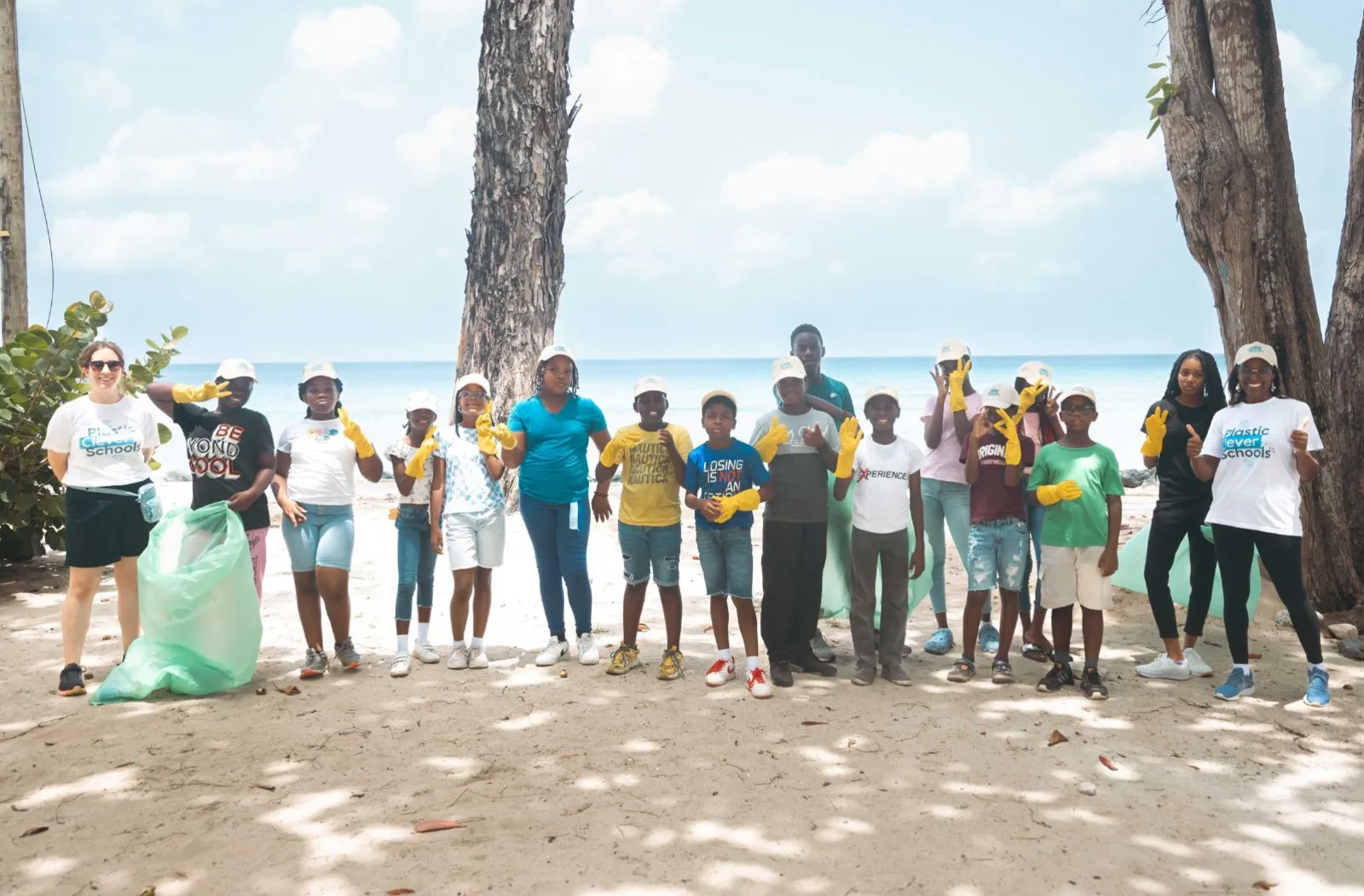
Barbados took bold, practical action to tackle plastic pollution with support from the Commonwealth Blue Charter Project Incubator. By providing financial support, the Incubator has been instrumental in assisting Barbados’ progress towards achieving the ambitious goal of reducing plastic pollution by 74 per cent over the next decade through the development of a National Adaptation Plan (NAP).
Embracing comprehensive policies to reduce plastic pollution
The success of Barbados’s approach is grounded in its robust policy framework. The Ministry of Environment and Common Seas used the Plastic Drawdown tool to analyse plastic flows and model the potential impact of various interventions. Following extensive stakeholder consultations, the NAP identified five core policy actions: tackling single-use items, improving waste separation, promoting circular design, expanding drinking water refill infrastructure, and strengthening monitoring and enforcement. Together, these measures form a comprehensive, evidence-based approach to reducing plastic pollution, positioning Barbados as an example of international best practice for sustainable plastics management.
The Government of Barbados has consistently recognised and stressed the importance of this strategy. Reflecting on this work, the Hon Adrian Forde, Minister of Environment, National Beautification, Green and Blue Economy, highlighted the value of partnership, noting that the expertise provided through the project helped Barbados craft a strategy tailored to both its environmental challenges and its national ambition. He said:
“Heartfelt gratitude to Common Seas and partners. Their expertise and commitment have been instrumental in shaping a comprehensive strategy that addresses the unique challenges and opportunities we face."
Empowering youth through education
Image
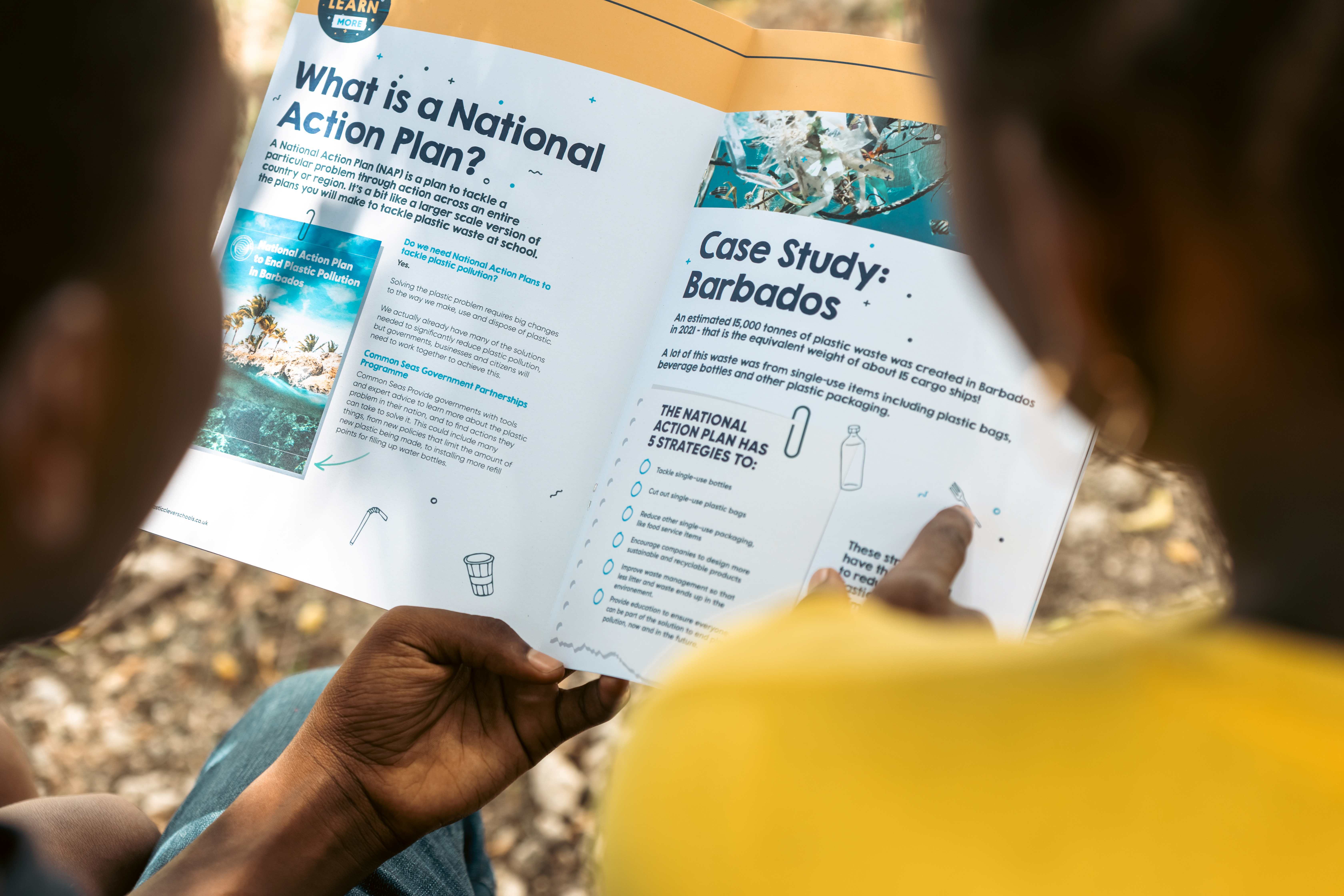
Education was central to Barbados’s success. Recognising the role of young people as changemakers, a Plastic Clever Schools Climate Camp – the first of its kind in the Caribbean – provided an engaging way to start taking action. Students and teachers explored the science of plastic pollution, carried out beach clean-ups, and connected their own advocacy campaigns with the policies in the newly adopted NAP.
The initiative gained significant support and expanded rapidly. To date, over 500 students have taken part in activities to reduce plastic waste. Further funding was secured to extend the installation of drinking fountains in schools, one of the key policy changes identified in the plan, aligning with public health goals supported by the Department of Education.
These collaborations show how bringing education and policy together can spark widespread youth enthusiasm. As Kimar Hinds, youth advocate and participant, explained:
“These engagements are imperative for developing environmentally friendly and sustainable practices. It would be great to see this type of engagement continue to drive meaningful environmental change.”
Scaling the Barbados model across SIDS
The Barbados experience demonstrates how building local expertise can lead to projects that are replicable across SIDS. Stacey Alvarez de la Campa, who served as the Project Officer in Barbados through the Incubator, now continues her work as part of Common Seas’ team, informing new initiatives through the UK Sustainable Blue Economies Programme.
This locally led model, combining on-the-ground technical support, government ownership, and youth engagement, is now delivered in several SIDS, including Saint Lucia, where Common Seas is working with the Department of Sustainable Development to implement the Management of Beverage Containers Bill, assess alternatives to single-use plastics, and develop ready-to-fund project concepts.
Dr Charlotte Davies, Managing Director, Common Seas, emphasised the value of this approach, noting how replicating the Barbados model is helping other islands accelerate progress:
“The Barbados model showed us the value of national ownership. By embedding technical expertise locally, we are seeing faster progress, stronger collaboration, and solutions that last."
A lasting wave of change
The Commonwealth Secretariat’s support helped Barbados move from commitment to implementation, turning one national project into a broader wave of regional reform. From Bridgetown to Castries to Bissau, the lessons from Barbados continue to inspire ocean-positive action throughout the Commonwealth.
To keep this momentum going, the Commonwealth Secretariat will launch its Blue Charter Project Incubator Round II in 2026, supporting Commonwealth countries to design and scale ocean solutions that accelerate fair, sustainable and inclusive marine projects, while helping with climate change adaptation and mitigation.
Media contact
Suné Kitshoff
Senior Communications Officer
T: +44 7740 450 901 | Email our media contact Suné Kitshoff