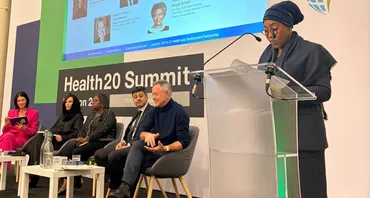


Eighty years after countries gathered at Central Hall Westminster for the first United Nations General Assembly, Commonwealth Secretary-General, Hon Shirley Botchwey, returned to the same hall with a challenge: make global cooperation work for the people it too often leaves behind.
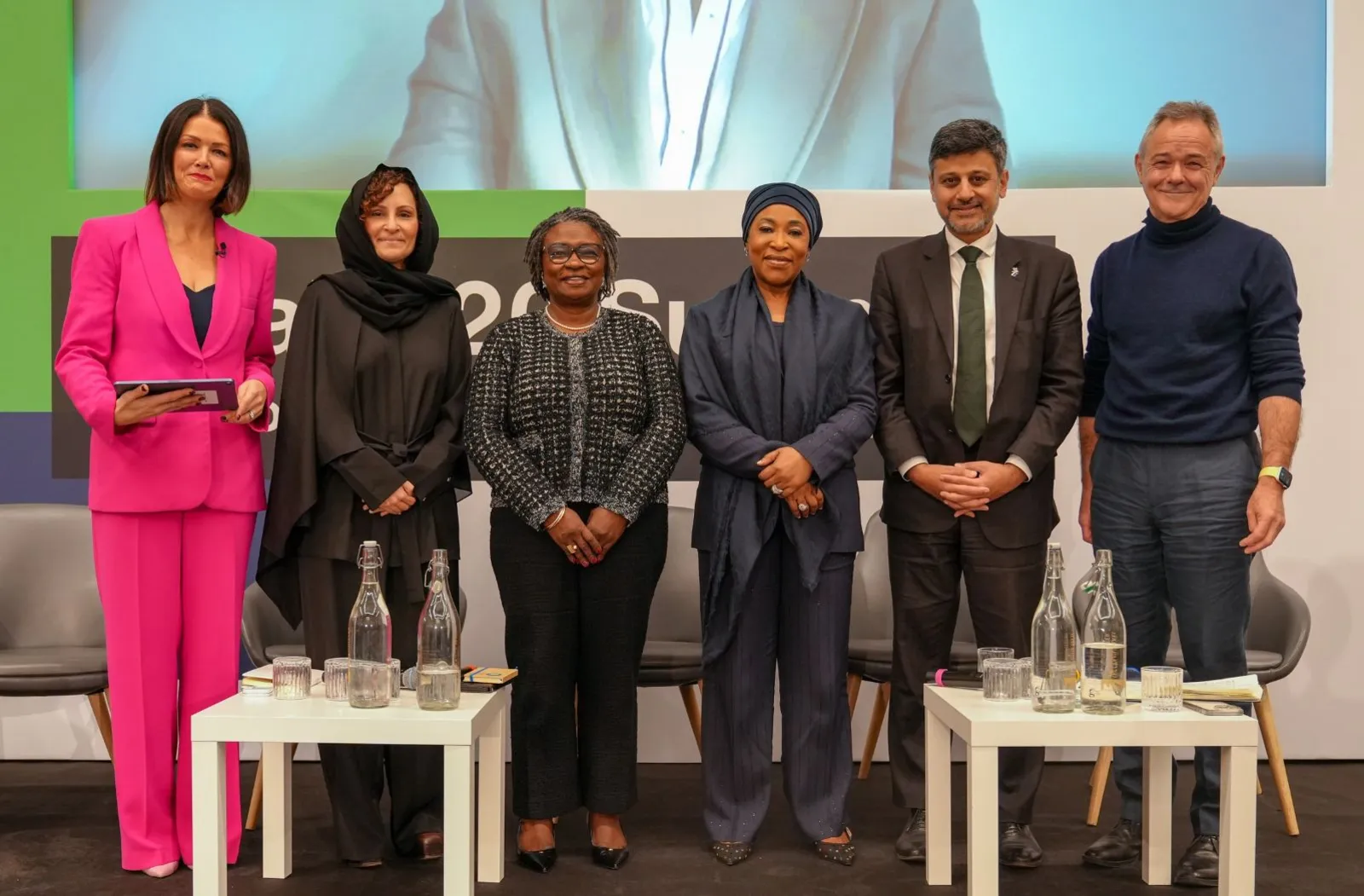
Addressing the H20 Summit in London on 23 November 2026, Secretary-General Botchwey called for stronger regional alliances and a greater voice for small states and developing economies, highlighting how health can demonstrate the benefits of effective cooperation.
Of today’s 56 Commonwealth members, she noted that only six were represented at the first UN gathering in 1946. This contrast framed her call for an international system that reflects today’s world rather than yesterday’s balance of power. The Secretary-General said:
“Our task now is to create an ambitious new model of global co-operation, better suited to the realities of the twenty-first century. It should be inspired by the enduring values expressed in the UN and Commonwealth Charters. But its mechanics must reflect today’s multipolar world.
The Commonwealth advantage: global reach, local roots
Secretary-General Botchwey highlighted how the Commonwealth’s network of 56 countries and 2.7 billion people turns close relationships into collective action.
Twelve of its over 100 accredited organisations focus on human health, from medical and dental associations to the Nurses and Midwives Federation, Sightsavers and Malaria No More.
Rooted in local, national and regional networks, these organisations bring frontline experience into Commonwealth policy and advocacy. That approach also shapes the Secretariat’s collaboration with the World Health Organization (WHO). A renewed four-year agreement, signed in September, brings together WHO’s technical expertise and global standards and the Commonwealth’s power to mobilise collective action.
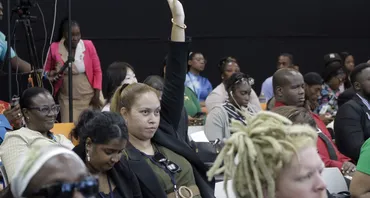
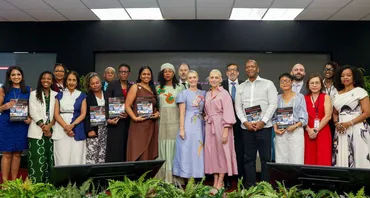
Recent outcomes from the Commonwealth Heads of Government Meeting (CHOGM) in Antigua and Barbuda demonstrated this collaboration in practice. The first Global Summit for Eye Health, convened by the host country alongside WHO, secured major new commitments to expand access to eye care. A new report on cancer in the Commonwealth, prepared with The Lancet Oncology Commission, also set out how investment in cancer control can save lives and strengthen economic resilience.
Making room to invest in health
The Secretary-General stressed that cooperation must also tackle a practical barrier, saying:
“…Countries need the fiscal space to sustain health services… Health spending is indeed an investment in the strength and prosperity of our societies and our economies.”
The Secretary-General linked that ambition to reform of global rules on debt management, access to finance, trade and investment. Progress on debt and development finance, she argued, could deliver a health dividend by enabling more countries to invest in the services their people need.
Looking ahead to the United Kingdom’s G20 Presidency in 2027, Secretary-General Botchwey expressed confidence that the agenda could be advanced further, particularly through renewed attention to debt and development finance.
The H20 Summit, held from 23–24 November under the theme Health Resilience: Self-Reliance and Smart Investments in Contested Times, provided a forum for that discussion. Her message centred on people: stronger alliances matter when they translate into healthier lives and more resilient societies.
Read the Secretary-General’s keynote address at the H20 Annual Summit